1. 引言 1.1. 分布式锁 分布式锁(Distributed Lock)是一种用于分布式系统中实现互斥访问的机制,在分布式系统中,多个节点同时访问共享资源可能导致数据不一致或竞态条件的问题,分布式锁通过协调多个节点之间的访问,确保在同一时间只有一个节点能获得对共享资源的独占访问权限,从而解决并发访问问题。
1.2. 分布式锁实现方式 常用的分布式锁实现方式有:
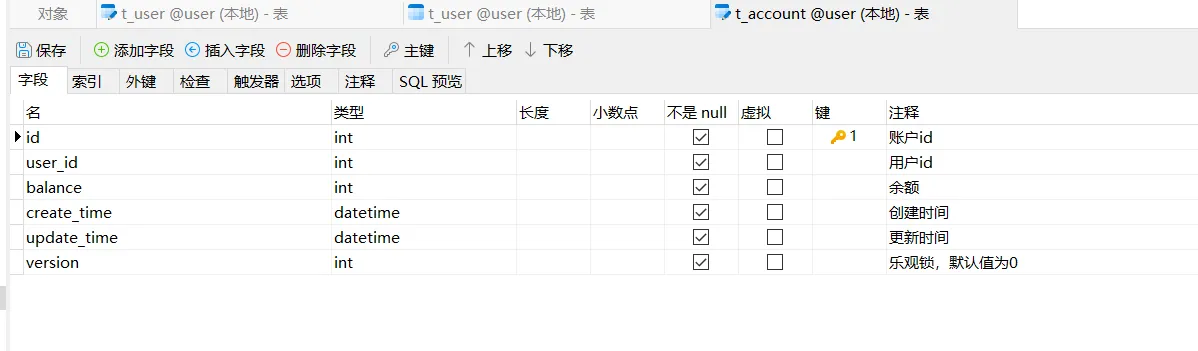
2. 基于数据库的分布式锁(乐观锁) 基于数据库的分布式锁实现方案,一般是在表中加一个字段,用于表示版本号,当读取数据时,会读取对应的版本号,在更新数据的时候,也会相应的更新版本号(比如版本号递增),且在更新数据的时候,会判断当前版本号是否正确,以账户余额修改为例,具体流程如下:
然后在账户表上插入一条数据,假设账户中有1000元
对应的实体类和mapper:
1
2
3
4
5
6
7
8
9
10
11
12
13
14
15
16
17
18
19
20
21
22
@TableName(value = "t_account") @Data public class Account implements Serializable {@TableId(type = IdType.AUTO) private Integer id;private Integer userId;private Integer balance;private Date createTime;private Date updateTime;private Integer version;@Mapper public interface AccountMapper extends BaseMapper <Account> {
然后我们创建一个AccountService,先演示没有乐观锁时,会造成的问题
1
2
3
4
5
6
7
8
9
10
11
12
13
14
15
16
17
18
19
20
21
22
23
24
25
26
27
28
29
package org.example.service;import org.example.mapper.AccountMapper;import org.example.pojo.Account;import org.example.request.account.TakeOutMoneyRequest;import org.springframework.beans.factory.annotation.Autowired;import org.springframework.stereotype.Service;import java.util.Date;@Service public class AccountService {@Autowired private AccountMapper accountMapper;public boolean takeOutMoneyWithoutOpLock (TakeOutMoneyRequest request) throws InterruptedException {Integer accountId = request.getAccountId();Account account = accountMapper.selectById(accountId);if (account.getBalance() - request.getMoney() < 0 ) {"余额不足==============" );return false ;1000 );new Date ());return accountMapper.updateById(account) > 0 ;
添加一个测试类,用于演示并发情况下,账户余额的减少
1
2
3
4
5
6
7
8
9
10
11
12
13
14
15
16
17
18
19
20
21
22
23
24
25
26
27
28
29
package org.example.service;import org.example.mapper.AccountMapper;import org.example.pojo.Account;import org.example.request.account.TakeOutMoneyRequest;import org.springframework.beans.factory.annotation.Autowired;import org.springframework.stereotype.Service;import java.util.Date;@Service public class AccountService {@Autowired private AccountMapper accountMapper;public boolean takeOutMoneyWithoutOpLock (TakeOutMoneyRequest request) throws InterruptedException {Integer accountId = request.getAccountId();Account account = accountMapper.selectById(accountId);if (account.getBalance() - request.getMoney() < 0 ) {"余额不足==============" );return false ;1000 );new Date ());return accountMapper.updateById(account) > 0 ;
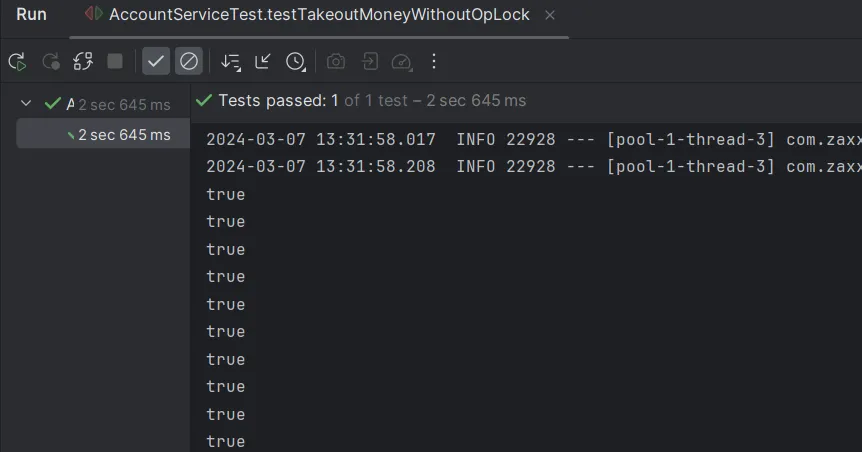
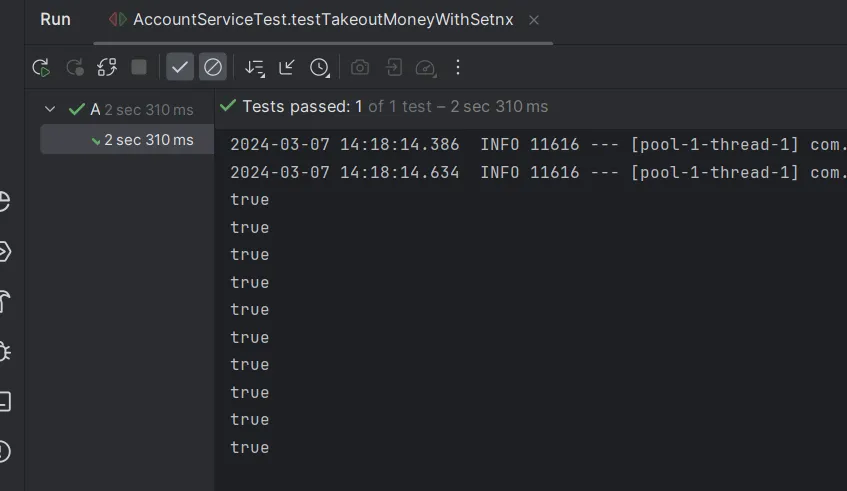
运行测试方法,结果如下图所示,说明都更新成功了
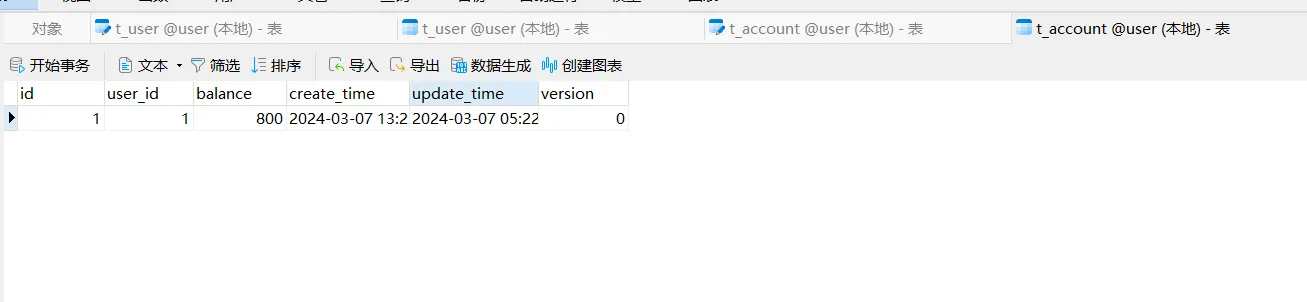
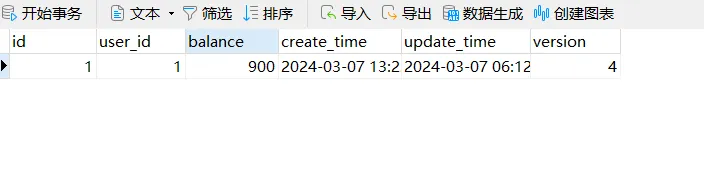
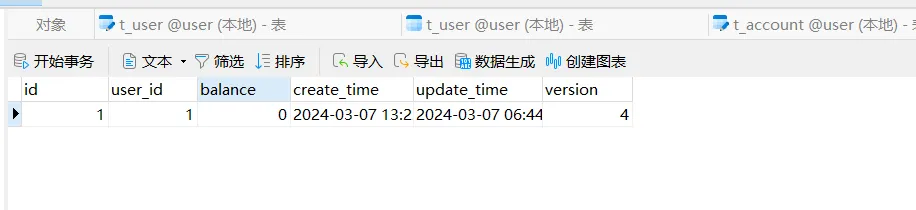
然后查看数据库:
如上图所示,原先我们的账户余额是1000元,每次扣除100元,经过10次扣减后,账户余额应该为0,但是因为并发问题,导致查询的时候,有多个请求查询到同一个值,最后导致数据不一致。
1
2
3
4
5
6
7
8
9
10
11
12
13
14
15
16
17
public boolean takeOutMoneyWithOpLock (TakeOutMoneyRequest request) throws InterruptedException {Integer accountId = request.getAccountId();Account account = accountMapper.selectById(accountId);if (account.getBalance() - request.getMoney() < 0 ) {"余额不足==============" );return false ;1000 );new LambdaUpdateWrapper <>();1 )new Date ())return accountMapper.update(account, lambdaUpdateWrapper) > 0 ;
我们把金额修改回1000,然后添加测试方法:
1
2
3
4
5
6
7
8
9
10
11
12
13
14
15
16
17
18
19
20
21
22
23
@Test public void testTakeoutMoneyWithOpLock () throws ExecutionException, InterruptedException {ExecutorService executorService = Executors.newFixedThreadPool(5 );TakeOutMoneyRequest request = new TakeOutMoneyRequest ();1 );100 );try {return accountService.takeOutMoneyWithOpLock(request);catch (InterruptedException e) {return false ;new ArrayList <>();for (int i = 0 ; i < 10 ; i++) {for (Future<Boolean> future : futureList) {
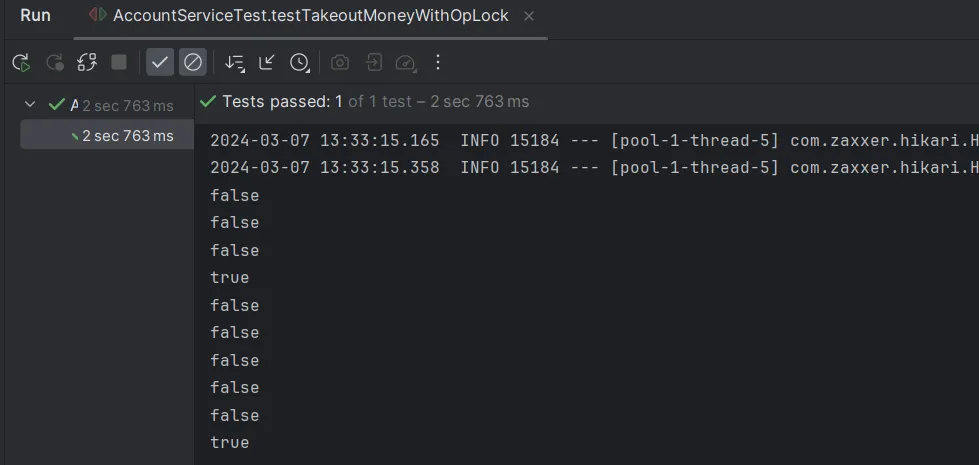
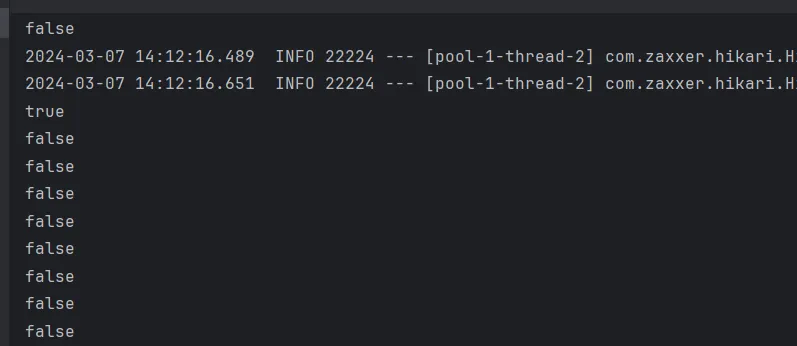
运行测试方法,结果如下,说明只有两次更新成功了,其余的更新,都以为乐观锁被修改了,导致更新失败
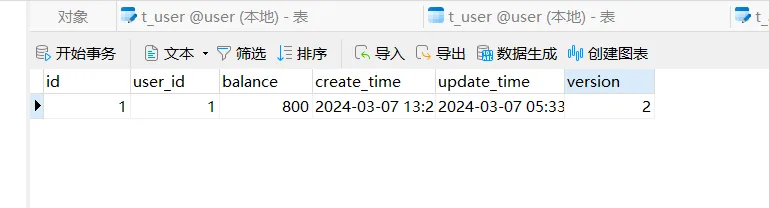
然后我们查看数据库,结果如下,因为扣减了两次,所有余额为800,这个数据对的上。
乐观锁的实现思路,是基于对并发更新的乐观假设,也就是认为冲突的概率较低,因此在读取和提交数据时进行版本号或时间戳的比较,而不是在数据访问阶段进行加锁操作,避免了显示的锁竞争,提高了并发性能。但乐观锁并不能完全消除并发冲突,只是在提交数据时进行冲突检测和处理,如果系统中的并发冲突非常频繁,乐观锁的效率可能会下降。
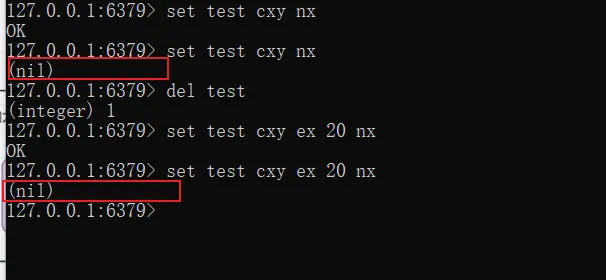
3. 基于Redis的分布式锁 3.1. 基于Redis的SETNX实现分布式锁 SETNX指的是set if not exist,也就是当key不存在的时候,设置key的值,存在的话,什么都不做, 其语法为:
如果我们要设置过期时间的话,可以使用
如下图所示,在使用nx指令的时候,只有在该key不存在的时候,才能设置成功
我们修改之前的RedisUtils工具类,添加上和这两条指令相关的方法:
1
2
3
4
5
6
7
8
9
10
11
12
13
14
15
16
17
18
public boolean setIfAbsent (String key, Object value) {return redisTemplate.opsForValue().setIfAbsent(key, value);public boolean setIfAbsent (String key, Object value, long time) {return setIfAbsent(key, value, time, TimeUnit.SECONDS);public boolean setIfAbsent (String key, Object value, long time, TimeUnit timeUnit) {return redisTemplate.opsForValue().setIfAbsent(key, value, time, timeUnit);
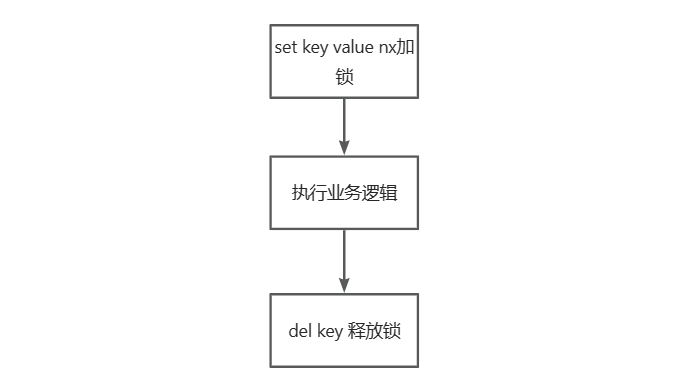
3.1.1. 通过setnx实现分布式锁 具体流程如下:
我们修改AccountService,添加和该指令相关的方法:
1
2
3
4
5
6
7
8
9
10
11
12
13
14
15
16
17
18
19
20
21
22
23
@Autowired private RedisUtils redisUtils;public boolean takeOutMoneyWithSetnx (TakeOutMoneyRequest request) {Integer accountId = request.getAccountId();String key = "lock::" + accountId;boolean lock = redisUtils.setIfAbsent(key, request.getAccountId());if (!lock) {return false ;try {Account account = accountMapper.selectById(accountId);new Date ());return accountMapper.updateById(account) > 0 ;finally {
添加测试方法:
1
2
3
4
5
6
7
8
9
10
11
12
13
14
15
16
17
18
19
@Test public void testTakeoutMoneyWithSetnx () throws ExecutionException, InterruptedException {ExecutorService executorService = Executors.newFixedThreadPool(5 );TakeOutMoneyRequest request = new TakeOutMoneyRequest ();1 );100 );return accountService.takeOutMoneyWithSetnx(request);new ArrayList <>();for (int i = 0 ; i < 10 ; i++) {for (Future<Boolean> future : futureList) {
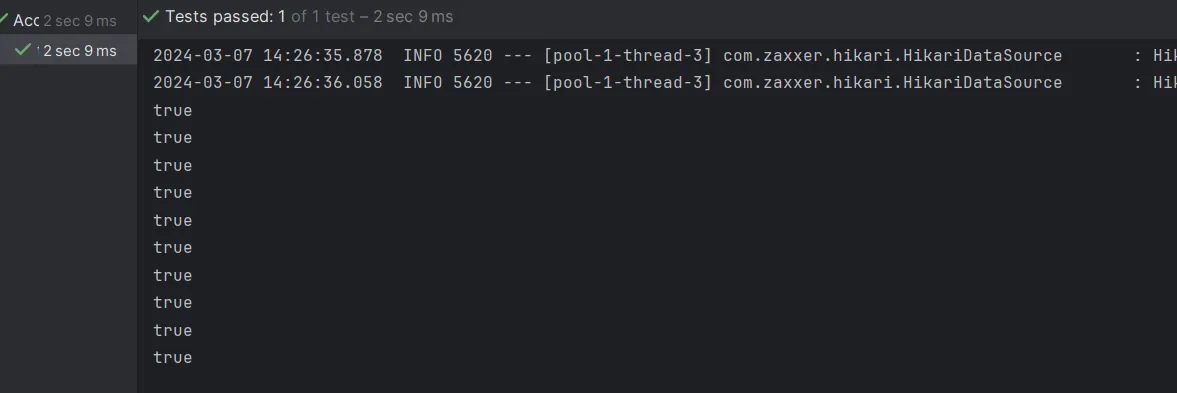
测试结果如下:
我们查看数据库,确实只扣减了100
这里冲突次数比较多,因此更新的效率有点低,我们可以将对应的方法修改一下,加上重试,修改代码如下:
1
2
3
4
5
6
7
8
9
10
11
12
13
14
15
16
17
18
19
20
21
22
23
24
25
26
27
28
@Autowired private RedisUtils redisUtils;public boolean takeOutMoneyWithSetnx (TakeOutMoneyRequest request) {Integer accountId = request.getAccountId();String key = "lock::" + accountId;boolean lock = redisUtils.setIfAbsent(key, request.getAccountId());if (lock) {try {Account account = accountMapper.selectById(accountId);new Date ());return accountMapper.updateById(account) > 0 ;finally {try {100 );catch (InterruptedException e) {return takeOutMoneyWithSetnx(request);
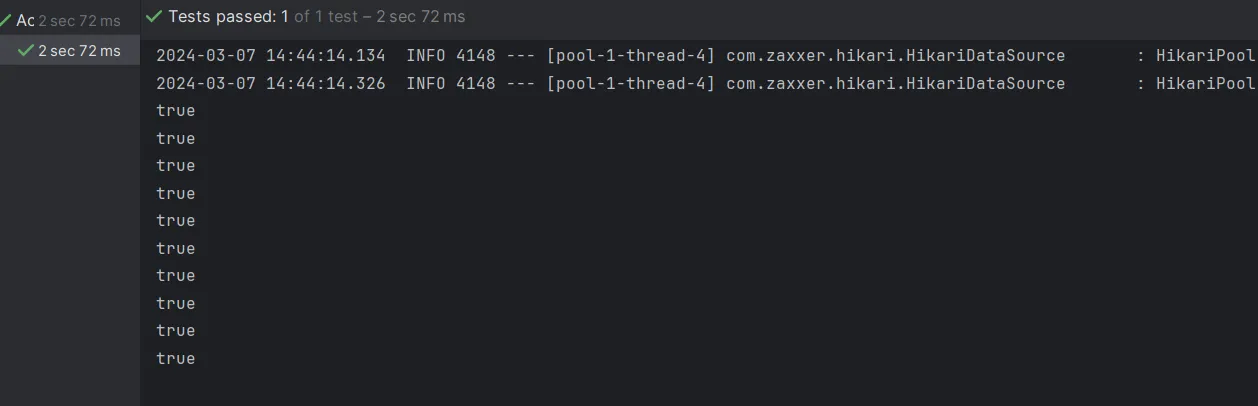
这里休眠了一段时间,是因为要涉及到递归调用,可能会导致栈空间溢出,我们再次执行测试代码,结果如下,经过重试后,执行成功率变高。
查看数据库,确实扣减了10次。
但是,使用set key value nx存在一个问题,如果setnx占锁成功,但是服务器宕机了,没有执行删除锁的逻辑,那么就会造成这个锁一直没有被释放,最终导致死锁。
3.1.2. setnx with expire 为解决setnx造成的死锁问题,我们在setnx的基础上,加上过期时间,来解决上述问题。我们给AccountService添加上对应的方法如下:
1
2
3
4
5
6
7
8
9
10
11
12
13
14
15
16
17
18
19
20
21
22
23
24
25
26
public boolean takeOutMoneyWithSetnxExpire (TakeOutMoneyRequest request) {Integer accountId = request.getAccountId();String key = "lock::" + accountId;boolean lock = redisUtils.setIfAbsent(key, request.getAccountId(), TTL);if (lock) {try {Account account = accountMapper.selectById(accountId);new Date ());return accountMapper.updateById(account) > 0 ;finally {try {100 );catch (InterruptedException e) {return takeOutMoneyWithSetnx(request);
添加上对应的测试方法:
1
2
3
4
5
6
7
8
9
10
11
12
13
14
15
16
17
18
19
@Test public void testTakeoutMoneyWithSetnxExpire () throws ExecutionException, InterruptedException {ExecutorService executorService = Executors.newFixedThreadPool(5 );TakeOutMoneyRequest request = new TakeOutMoneyRequest ();1 );100 );return accountService.takeOutMoneyWithSetnxExpire(request);new ArrayList <>();for (int i = 0 ; i < 10 ; i++) {for (Future<Boolean> future : futureList) {
测试结果如下:
我们 查看数据库,数据库也确实扣减了10次
但是,这个方案还是有一定缺陷,因为我们设置的这个过期时间,是根据我们的经验设置的,而业务代码的执行时长,是不确定的,那么可能存在这种情况,假设我们现在有三个请求过来,我们设置的过期时间是100ms
1
2
3
4
5
6
7
8
9
10
11
12
13
14
15
16
17
18
19
20
21
22
23
24
25
26
27
28
29
30
31
32
@Autowired private RedisTemplate<String, Object> redisTemplate;public boolean takeOutMoneyWithSetnxExpire (TakeOutMoneyRequest request) {Integer accountId = request.getAccountId();String key = "lock::" + accountId;long threadId = Thread.currentThread().getId();boolean lock = redisUtils.setIfAbsent(key, threadId, TTL);if (lock) {try {Account account = accountMapper.selectById(accountId);new Date ());return accountMapper.updateById(account) > 0 ;finally {String script = "if redis.call('get', KEYS[1]) == ARGV[1] then return redis.call('del', KEYS[1]) else return 0 end" ;new DefaultRedisScript <Long>(script, Long.class), Arrays.asList(key), threadId);try {100 );catch (InterruptedException e) {return takeOutMoneyWithSetnx(request);
再次执行测试代码:
查看数据库,确实减少10次
但这里还有一个问题没有解决,因为我们设置的TTL,是我们的经验值,不准确,所以还是会存在,某个请求占有锁后,还没执行完毕,锁过期了,被另外一个请求占有,此时会出现两个请求都认为自己占有锁的情况。
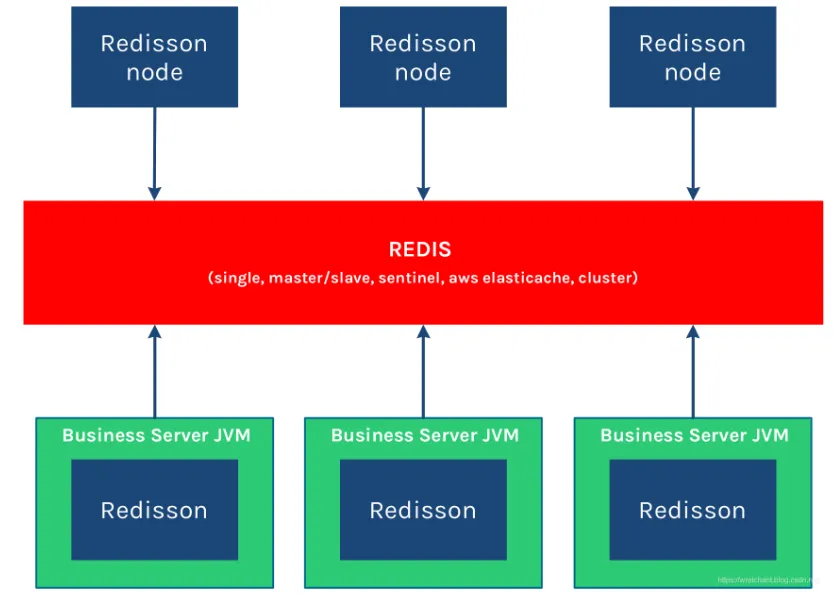
3.2. Redisson 3.2.1. 简介 Redisson是一个在Redis基础上实现的Java驻内存数据网络,它不仅提供一系列的分布式java常用对象,还提供许多分布式服务,其宗旨是促进使用者对Redis的关注分离(Separation of Concern),从而让使用者能将精力更多集中在处理业务逻辑上。
3.2.2. SpringBoot 整合Redisson 引入redisson的maven依赖:
1 2 3 4 5 <dependency > <groupId > org.redisson</groupId > <artifactId > redisson</artifactId > <version > 3.15.5</version > </dependency >
然后自定义配置类(这里使用的是单节点Redis配置)
1
2
3
4
5
6
7
8
9
10
11
12
13
14
15
16
17
18
19
20
21
22
package org.example.config;import org.redisson.Redisson;import org.redisson.api.RedissonClient;import org.redisson.config.Config;import org.springframework.context.annotation.Bean;import org.springframework.context.annotation.Configuration;@Configuration public class RedissonConfiguration {@Bean public RedissonClient redisson () {Config config = new Config ();"redis://127.0.0.1:6379" );return Redisson.create(config);
我们添加测试方法,来测试redisson的一些基本操作:
1
2
3
4
5
6
7
8
9
10
11
12
13
14
15
16
17
18
19
20
21
22
23
24
25
26
27
28
29
30
31
32
33
34
35
36
37
38
39
40
41
42
43
44
45
46
47
48
49
50
51
52
53
package org.example;import com.alibaba.fastjson.JSONObject;import org.junit.jupiter.api.Test;import org.redisson.api.*;import org.springframework.beans.factory.annotation.Autowired;import org.springframework.boot.test.context.SpringBootTest;import java.util.concurrent.TimeUnit;@SpringBootTest public class RedissonTest {@Autowired private RedissonClient redissonClient;@Test public void testRedisson () {"name" );"cxy" , 30 , TimeUnit.SECONDS);"name" ).get());"student" );"id" , 1 );"name" , "cxy" );"age" , 20 );30 , TimeUnit.SECONDS);"student" ).get("name" ));"schools" );"华南理工大学" );"中山大学" );"暨南大学" );"schools" )));"schoolSet" );"华南理工大学" );"中山大学" );"暨南大学" );"schoolSet" )));"schoolScoreSet" );100d , "华南理工大学" );90d , "中山大学" );80d , "暨南大学" );"schoolScoreSet" )));
结果如下:
3.2.3. Redisson分布式锁 redisson加锁,可以使用lock方法,注意,在加锁的时候,处理完业务逻辑后要记得释放锁,测试代码如下:
1
2
3
4
5
6
7
8
9
10
11
12
13
14
15
16
17
18
19
20
21
22
23
24
25
26
27
28
29
30
@Test public void testLock () throws ExecutionException, InterruptedException {ExecutorService executorService = Executors.newFixedThreadPool(2 );Runnable lockTask = () -> {try {catch (InterruptedException e) {new ArrayList <>();for (int i = 0 ; i < 2 ; i++) {for (Future future : futureList) {private void lock () throws InterruptedException {RLock myLock = redissonClient.getLock("myLock" );try {"currentTime:" + System.currentTimeMillis());2000 );"执行业务代码" );finally {
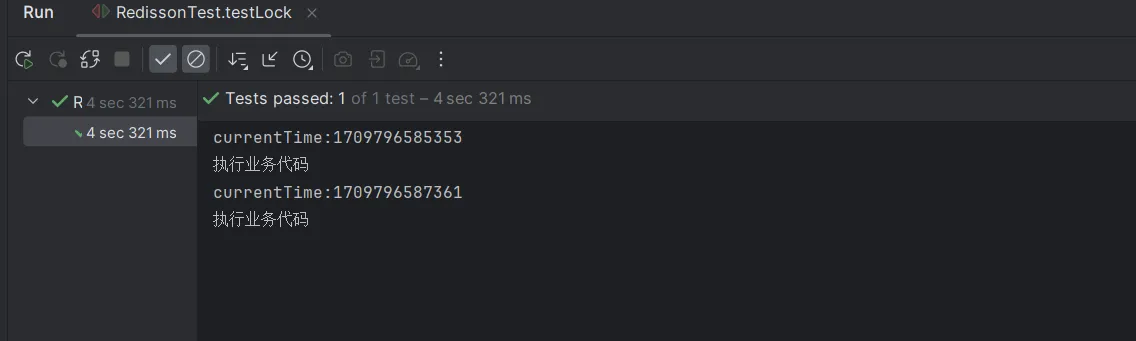
测试结果如下,从执行结果可以看出,当多个线程抢占锁时,后面的锁,需要等待,即这个锁是阻塞的。
如果不想阻塞的话,我们可以使用tryLock来上锁,结合刚才的accountService,我们先修改accountService,加上对应的方法
1
2
3
4
5
6
7
8
9
10
11
12
13
14
15
16
17
18
19
20
21
22
23
@Autowired private RedissonClient redissonClient;public boolean takeoutMoneyWithRedissonTryLock (TakeOutMoneyRequest request) throws InterruptedException {Integer accountId = request.getAccountId();String key = "lock::" + accountId;RLock lock = redissonClient.getLock(key);if (lock.tryLock(2 , 4 , TimeUnit.SECONDS)) { try {1000 );Account account = accountMapper.selectById(accountId);new Date ());return accountMapper.updateById(account) > 0 ;finally {return false ;
添加测试方法:
1
2
3
4
5
6
7
8
9
10
11
12
13
14
15
16
17
18
19
@Test public void testTakeoutMoneyWithRedissonTryLock () throws ExecutionException, InterruptedException {ExecutorService executorService = Executors.newFixedThreadPool(5 );TakeOutMoneyRequest request = new TakeOutMoneyRequest ();1 );100 );return accountService.takeoutMoneyWithRedissonTryLock(request);new ArrayList <>();for (int i = 0 ; i < 10 ; i++) {for (Future<Boolean> future : futureList) {
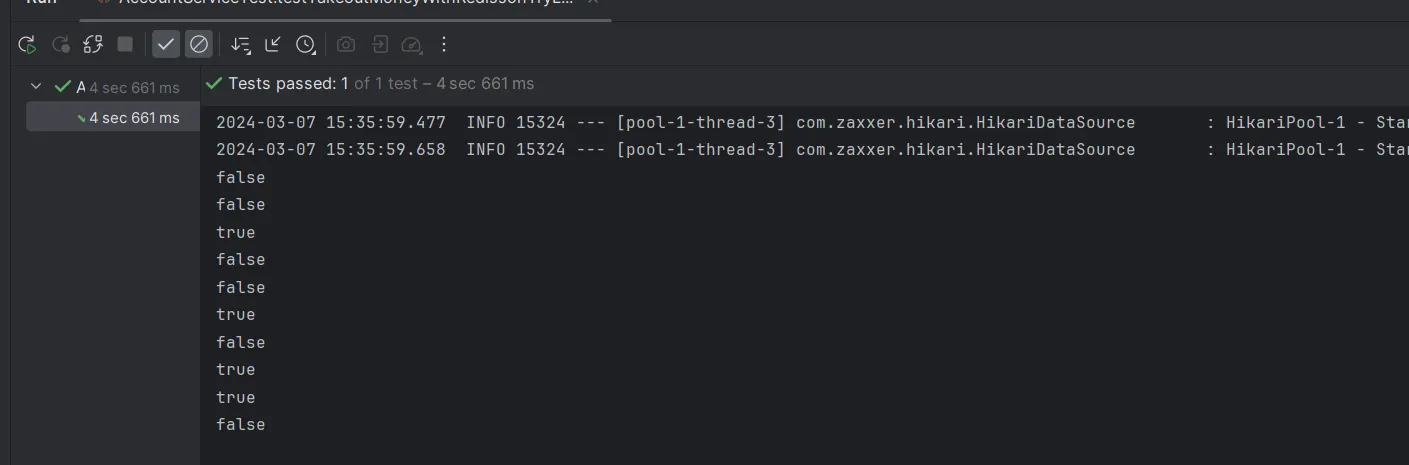
测试结果如下:
查看数据库,减少的次数与上面的次数一致
不过上面这种,成功率比较低,因此我们可以将tryLock改为lock方法,来上锁,我们修改accountService,添加相关方法:
1
2
3
4
5
6
7
8
9
10
11
12
13
14
15
16
17
18
public boolean takeoutMoneyWithRedissonLock (TakeOutMoneyRequest request) throws InterruptedException {Integer accountId = request.getAccountId();String key = "lock::" + accountId;RLock lock = redissonClient.getLock(key);2 , TimeUnit.SECONDS);try {1000 );Account account = accountMapper.selectById(accountId);new Date ());return accountMapper.updateById(account) > 0 ;finally {
添加测试方法:
1
2
3
4
5
6
7
8
9
10
11
12
13
14
15
16
17
18
19
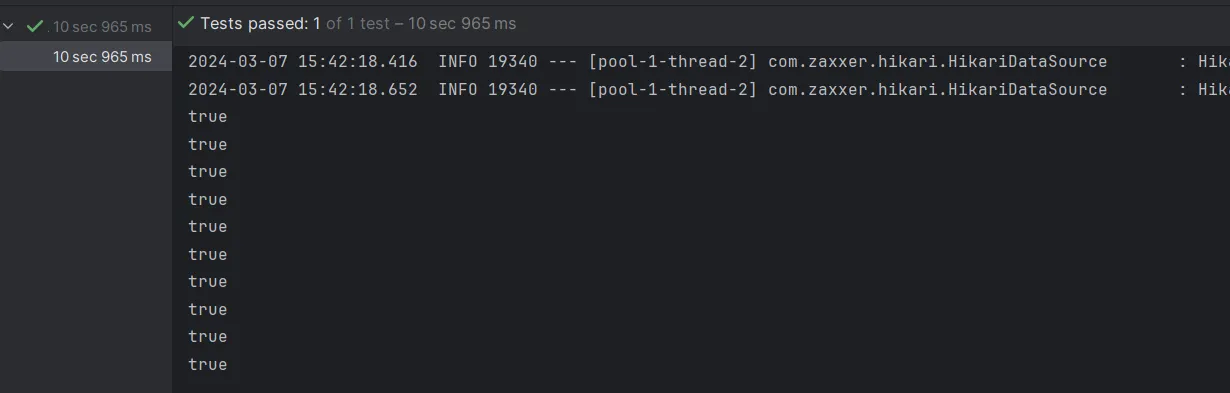
@Test public void testTakeoutMoneyWithRedissonLock () throws ExecutionException, InterruptedException {ExecutorService executorService = Executors.newFixedThreadPool(5 );TakeOutMoneyRequest request = new TakeOutMoneyRequest ();1 );100 );return accountService.takeoutMoneyWithRedissonLock(request);new ArrayList <>();for (int i = 0 ; i < 10 ; i++) {for (Future<Boolean> future : futureList) {
测试结果如下:
查看数据库,扣减次数确实为10次。
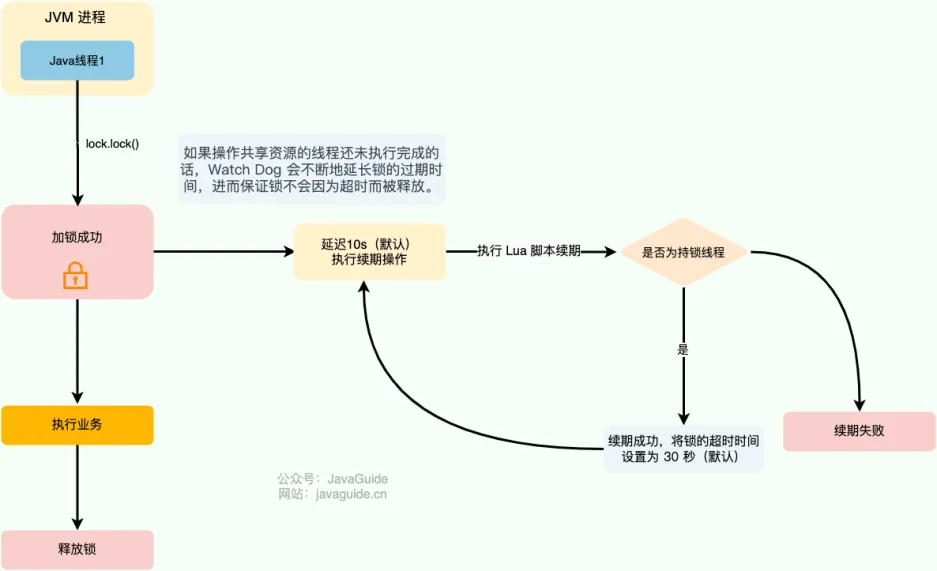
3.2.4. watch dog 看门狗机制 Redisson中的分布式锁自带自动续期机制,其提供了一个专门用来监控和续期锁的Watch Dog(看门狗),如果操作共享资源的线程还没有执行完成的话,Watch Dog会不断延长锁的过期时间,从而保证锁不会因为超时而被释放。
4. 参考文章 https://zhuanlan.zhihu.com/p/374306005 https://my.oschina.net/u/4499317/blog/5039486 https://blog.csdn.net/qq_15071263/article/details/101277474 https://www.cnblogs.com/jelly12345/p/14699492.html