引言
在XXL-JOB中,有一个xxl-job-admin项目,这个就相当于定时任务的调度平台,我们参考XXL-JOB,也添加这么一个调度平台,由于篇幅有限,我们先实现一个本地的定时任务调度平台,至于如何调用远程的定时任务,后面再进行讲解。
前期准备
首先我们创建一个springboot项目,引入下列依赖:
1
2
3
4
5
6
7
8
9
10
11
12
13
14
15
16
17
18
19
20
21
22
23
24
25
26
27
28
29
30
31
32
33
34
35
36
37
38
39
40
41
42
| <dependencies>
<dependency>
<groupId>org.projectlombok</groupId>
<artifactId>lombok</artifactId>
</dependency>
<dependency>
<groupId>com.cronutils</groupId>
<artifactId>cron-utils</artifactId>
<version>9.2.0</version>
</dependency>
<dependency>
<groupId>org.springframework.boot</groupId>
<artifactId>spring-boot-starter-web</artifactId>
</dependency>
<dependency>
<groupId>mysql</groupId>
<artifactId>mysql-connector-java</artifactId>
</dependency>
<dependency>
<groupId>com.baomidou</groupId>
<artifactId>mybatis-plus-boot-starter</artifactId>
<version>3.4.3</version>
</dependency>
<dependency>
<groupId>org.springframework.boot</groupId>
<artifactId>spring-boot-starter-test</artifactId>
</dependency>
<dependency>
<groupId>com.google.guava</groupId>
<artifactId>guava</artifactId>
<version>31.1-jre</version>
</dependency>
<dependency>
<groupId>org.springframework.boot</groupId>
<artifactId>spring-boot-starter-thymeleaf</artifactId>
</dependency>
<dependency>
<groupId>org.springframework.boot</groupId>
<artifactId>spring-boot-devtools</artifactId>
<scope>runtime</scope>
</dependency>
</dependencies>
|
创建yang-job表
1
2
3
4
5
6
7
8
9
10
11
12
13
14
15
16
| CREATE TABLE `yang_job` (
`id` int NOT NULL AUTO_INCREMENT,
`job_name` varchar(255) CHARACTER SET utf8mb4 COLLATE utf8mb4_general_ci NOT NULL,
`description` varchar(512) CHARACTER SET utf8mb4 COLLATE utf8mb4_general_ci NOT NULL,
`cron` varchar(255) CHARACTER SET utf8mb4 COLLATE utf8mb4_general_ci NOT NULL,
`execute_strategy` varchar(255) CHARACTER SET utf8mb4 COLLATE utf8mb4_general_ci NOT NULL COMMENT '执行策略:once/withFixedDelay/withFixedRate',
`execute_class_path` varchar(255) CHARACTER SET utf8mb4 COLLATE utf8mb4_general_ci NOT NULL,
`enable` tinyint(1) NOT NULL DEFAULT 1,
`open` tinyint(1) NOT NULL DEFAULT 0,
`create_time` datetime NOT NULL,
`update_time` datetime NOT NULL,
`features` varchar(512) CHARACTER SET utf8mb4 COLLATE utf8mb4_general_ci NOT NULL,
`execute_params` varchar(512) CHARACTER SET utf8mb4 COLLATE utf8mb4_general_ci NOT NULL,
PRIMARY KEY (`id`) USING BTREE
) ENGINE = InnoDB AUTO_INCREMENT = 12 CHARACTER SET = utf8mb4 COLLATE = utf8mb4_general_ci ROW_FORMAT = Dynamic;
|
层级关系
对于分层,我们参考阿里巴巴的COLA项目,分为5层,分别是controller层、client层、applicatioon层、domain层和infrastructure层。如下图所示:
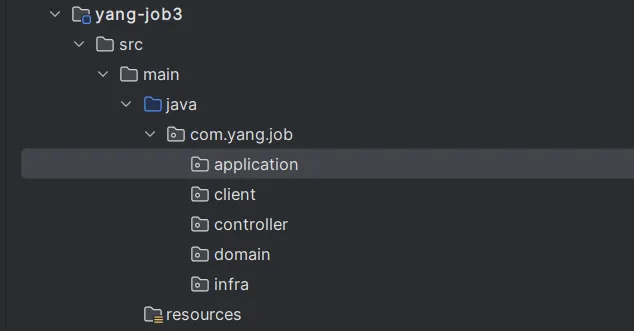
层级的依赖关系如下:
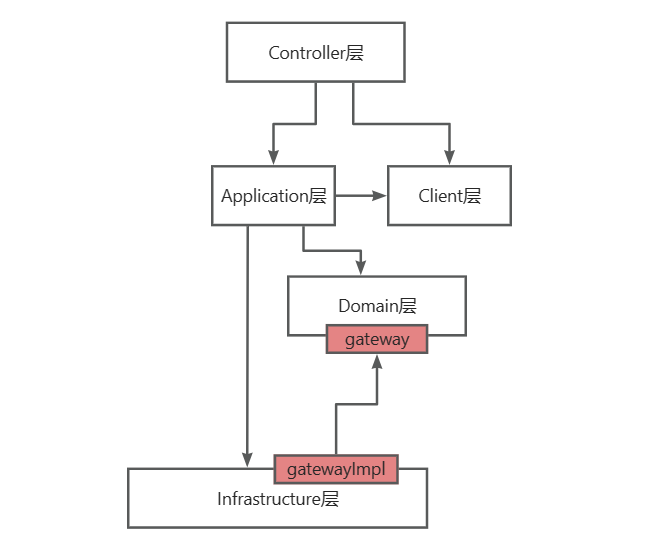
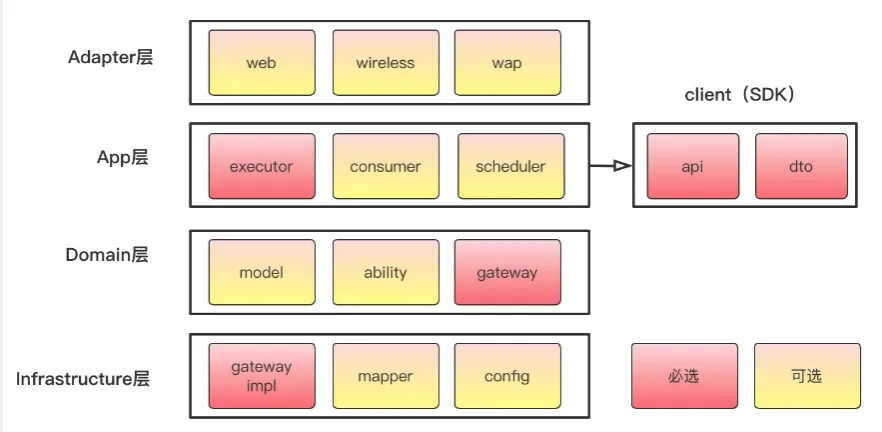
DDD四层架构,自上而下分别是用户界面层、应用层、领域层和基础设施层,上层可以依赖下层,而下层不能依赖上层。如下图所示:
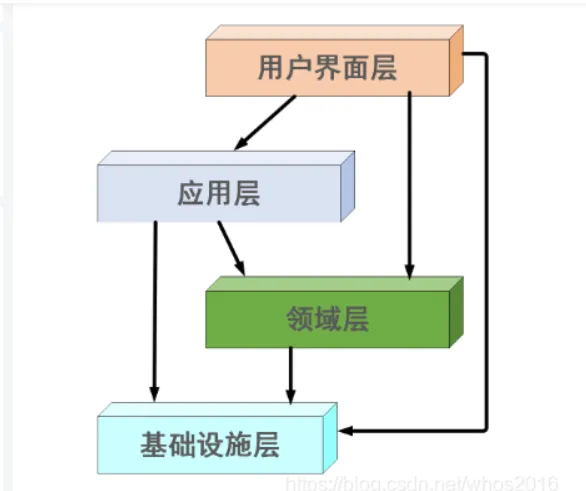
COLA架构和DDD的四层架构很相似,但是它在四层架构的基础上,进一步进行了约束,如下图所示
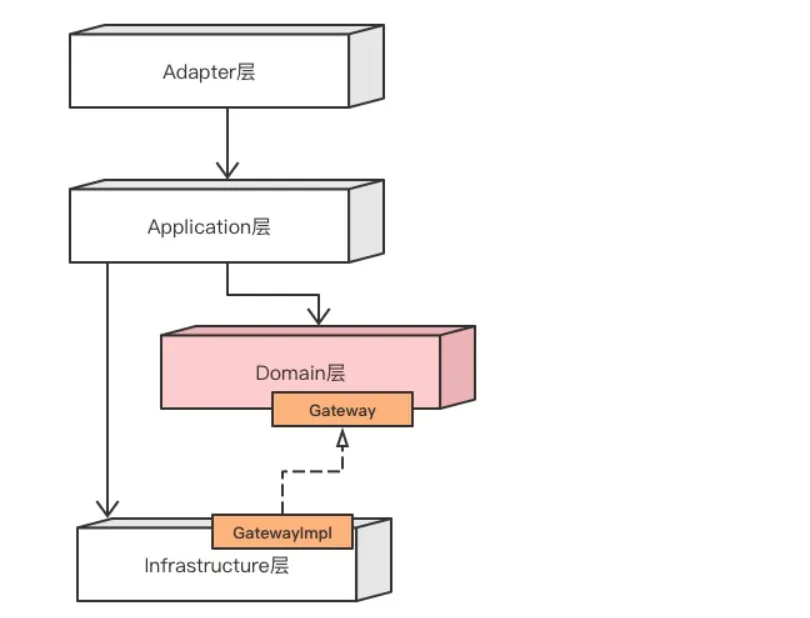
在本项目中,尽量参考COLA架构的约束进行实现,但也会根据实际情况灵活进行修改,即便违背了COLA架构的相关约束条件,也会遵守DDD四层架构的约束。
项目搭建
client层
client其实在COLA中,属于可选的一层,主要用于存储服务对外透出的API和DTO。在client层中,所拥有的类如下所示:
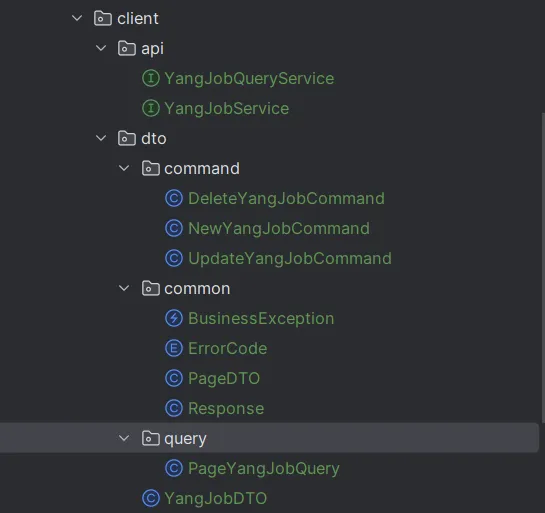
api主要定义了对外提供的接口,这里我定义两个api——YangJobQueryService和YangJobService,一个是用于查询的,一个是用于命令的。
在dto中,定义了三个包,其中,common包存放的,是通用的dto,比如是结果类、错误信息类、分页类等。command包存放的,则是命令类,query包存放查询类,其余的数据实体,直接放在dto包下。
为什么要定义command和query?这个其实体现的是CQRS模式(Command Query Responsibility Seregation,命令查询职责分离)。所谓命令,指的是会引起数据发生变化操作的总称,比如新增、更新、删除等操作,该方法要么改变对象的内部状态,但不返回任何内容,要么只返回元数据。所谓查询,指不会对数据产生变化的操作,只是按照某些条件查找数据。
domain层
领域层主要封装了核心业务逻辑,并通过领域服务或领域对象的方法,对App提供业务实体和业务逻辑计算,领域是应用的核心,不依赖任何其他层次。
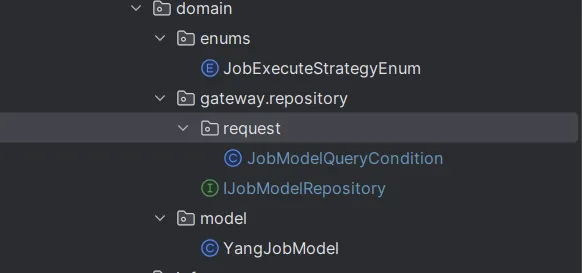
在目前的domain层中,其分层结构如上图所示,其中JobExecuteStrategyEnum就是我们之前提到的执行策略枚举。然后YangJobModel为具体的模型类,IJobModelRepository和JobModelQueryCondition为和数据库操作相关的类。
下面是IJobModelRepository的定义,其实这个IJobModelRepository的定义,违反我们刚才提到的”domain不依赖任何其他层次”,因为它使用到了client层提供的PageDTO,但是我觉得这里影响不大,如果说一定要遵循原则的话,可以在domain层也定义一个分页结果类,只是说在Application层中,如果涉及到分页结果的话,需要将domain层提供的分页结果转化为对外提供的分页结果。这里因为只是demo,就不做那么严格的限制了。
1
2
3
4
5
6
7
8
9
10
11
12
13
14
15
16
17
18
19
20
21
22
23
| package com.yang.job.domain.repository;
import com.yang.job.client.dto.common.PageDTO;
import com.yang.job.domain.model.YangJobModel;
import com.yang.job.domain.repository.request.JobModelQueryCondition;
import java.util.List;
public interface IJobModelRepository {
boolean saveYangJobModel(YangJobModel yangJobModel);
boolean updateYangJobModel(YangJobModel yangJobModel);
YangJobModel getYangJobModelById(Integer id);
List<YangJobModel> getOpenYangJobModelList();
PageDTO<YangJobModel> queryYangJobModelPage(JobModelQueryCondition jobModelQueryCondition);
boolean deleteJobModel(Integer id);
}
|
YangJobModel模型的代码如下所示,其实就目前来看,这个YangJobModel模型并没有什么业务逻辑,因为我们现在刚开始搭建,主要还是面向与增删改查的,所以业务逻辑相对来说较少。
1
2
3
4
5
6
7
8
9
10
11
12
13
14
15
16
17
18
19
20
21
22
23
24
25
26
27
28
29
30
31
32
33
34
35
36
37
38
39
40
41
42
43
44
45
46
47
48
49
50
51
52
53
54
55
56
57
58
59
60
61
62
63
64
65
66
67
68
69
70
71
72
73
74
75
76
77
78
79
80
81
82
| package com.yang.job.domain.model;
import com.yang.job.client.dto.common.BusinessException;
import com.yang.job.client.dto.common.ErrorCode;
import com.yang.job.domain.enums.JobExecuteStrategyEnum;
import lombok.Data;
import java.io.Serializable;
import java.util.Date;
import java.util.HashMap;
import java.util.Map;
@Data
public class YangJobModel implements Serializable {
private Integer jobId;
private String jobName;
private String description;
private String cron;
private String executeClassPath;
private Runnable runnable;
private JobExecuteStrategyEnum executeStrategy;
private Integer enable;
private Integer open;
private Date createTime;
private Date updateTime;
private Map<String, String> featureMap = new HashMap<>();
private Map<String, String> executeParamMap = new HashMap<>();
public boolean isEnable() {
if (this.enable == null) {
return false;
}
return this.enable == 1;
}
public boolean isOpen() {
if (!isEnable()) {
return false;
}
if (this.open == null) {
return false;
}
return this.open == 1;
}
public boolean isClose() {
return !isOpen();
}
public void setExecuteClassPath(String executeClassPath) {
if (executeClassPath == null || executeClassPath.isEmpty()) {
throw new BusinessException(ErrorCode.UN_LEGAL_CLASS_PATH);
}
try {
Class.forName(executeClassPath);
} catch (ClassNotFoundException e) {
e.printStackTrace();
throw new BusinessException(ErrorCode.UN_LEGAL_CLASS_PATH);
}
this.executeClassPath = executeClassPath;
}
public void setExecuteStrategy(JobExecuteStrategyEnum jobExecuteStrategyEnum) {
if (jobExecuteStrategyEnum == null) {
throw new BusinessException(ErrorCode.EXECUTE_STRATEGY_NO_EXIST);
}
this.executeStrategy = jobExecuteStrategyEnum;
}
}
|
application层
应用层主要负责获取输入、组装上下文、参数校验、调用领域层做业务处理,如果需要的话,发送消息通知等,层次是开放的,应用层也可以绕过领域层,直接访问基础设施层。
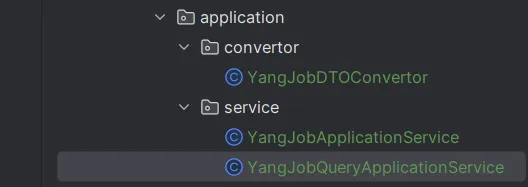
目前application相对比较简单,convertor包用于将我们的模型转化外对外提供的DTO类。
YangJobApplicationService的实现如下:
1
2
3
4
5
6
7
8
9
10
11
12
13
14
15
16
17
18
19
20
21
22
23
24
25
26
27
28
29
30
31
32
33
34
35
36
37
38
39
40
41
42
43
44
45
46
47
48
49
50
51
52
53
54
55
56
57
58
59
60
61
62
63
64
65
66
67
68
69
70
71
72
|
@Service
public class YangJobApplicationService implements YangJobService {
    @Resource
    private IJobModelRepository jobModelRepository;

    @Resource
    private YangJobDTOConvertor yangJobDTOConvertor;

    @Override
    public Response<YangJobDTO> saveYangJob(NewYangJobCommand newYangJobCommand) {
        YangJobModel yangJobModel = convert2YangJobModel(newYangJobCommand);
        if (jobModelRepository.saveYangJobModel(yangJobModel)) {
            YangJobDTO yangJobDTO = yangJobDTOConvertor.convert2DTO(yangJobModel);
            return Response.success(yangJobDTO);
        }
        return Response.fail();
    }

    private YangJobModel convert2YangJobModel(NewYangJobCommand newYangJobCommand) {
        YangJobModel yangJobModel = new YangJobModel();
        yangJobModel.setJobName(newYangJobCommand.getJobName());
        yangJobModel.setDescription(newYangJobCommand.getDescription());
        yangJobModel.setCron(newYangJobCommand.getCron());
        yangJobModel.setOpen(newYangJobCommand.getOpen());
        yangJobModel.setExecuteStrategy(JobExecuteStrategyEnum.getJobExecuteStrategyByName(newYangJobCommand.getExecuteStrategy()));
        yangJobModel.setExecuteClassPath(newYangJobCommand.getExecuteClassPath());
        yangJobModel.setExecuteParamMap(newYangJobCommand.getParams());
        return yangJobModel;
    }

    @Override
    public Response<YangJobDTO> updateYangJob(UpdateYangJobCommand updateYangJobCommand) {
        YangJobModel yangJobModel = jobModelRepository.getYangJobModelById(updateYangJobCommand.getJobId());
        if (yangJobModel == null) {
            return Response.fail();
        }

        if (updateYangJobCommand.getJobName() != null) {
            yangJobModel.setJobName(updateYangJobCommand.getJobName());
        }
        if (updateYangJobCommand.getCron() != null) {
            yangJobModel.setCron(updateYangJobCommand.getCron());
        }
        if (updateYangJobCommand.getOpen() != null) {
            yangJobModel.setOpen(updateYangJobCommand.getOpen());
        }
        if (!updateYangJobCommand.getParams().isEmpty()) {
            yangJobModel.setExecuteParamMap(updateYangJobCommand.getParams());
        }
        if (updateYangJobCommand.getExecuteClassPath() != null) {
            yangJobModel.setExecuteClassPath(updateYangJobCommand.getExecuteClassPath());
        }
        if (updateYangJobCommand.getExecuteStrategy() != null) {
            yangJobModel.setExecuteStrategy(JobExecuteStrategyEnum.getJobExecuteStrategyByName(updateYangJobCommand.getExecuteStrategy()));
        }
        if (jobModelRepository.updateYangJobModel(yangJobModel)) {
            YangJobDTO yangJobDTO = yangJobDTOConvertor.convert2DTO(yangJobModel);
            return Response.success(yangJobDTO);
        }
        return Response.fail();
    }

    @Override
    public Response<YangJobDTO> deleteYangJob(DeleteYangJobCommand deleteYangJobCommand) {
        Integer jobId = deleteYangJobCommand.getJobId();
        if (jobModelRepository.deleteJobModel(jobId)) {
            return Response.success();
        }
        return Response.fail();
    }
}
|
YangJobQueryApplicationService的实现如下:
1
2
3
4
5
6
7
8
9
10
11
12
13
14
15
16
17
18
19
20
21
22
23
24
25
26
27
28
29
30
31
32
33
34
35
36
37
38
39
40
41
|
@Service
public class YangJobQueryApplicationService implements YangJobQueryService {
    @Resource
    private IJobModelRepository jobModelRepository;

    @Resource
    private YangJobDTOConvertor yangJobDTOConvertor;

    @Override
    public Response<PageDTO<YangJobDTO>> queryYangJobPage(PageYangJobQuery pageYangJobQuery) {
        JobModelQueryCondition jobModelQueryCondition = convert2JobModelQueryCondition(pageYangJobQuery);
        PageDTO<YangJobModel> modelPageDTO = jobModelRepository.queryYangJobModelPage(jobModelQueryCondition);
        PageDTO<YangJobDTO> pageDTO = new PageDTO<>();
        pageDTO.setPageNo(modelPageDTO.getPageNo());
        pageDTO.setPageSize(modelPageDTO.getPageSize());
        pageDTO.setPages(modelPageDTO.getPages());
        pageDTO.setTotal(modelPageDTO.getTotal());

        List<YangJobDTO> dataList = modelPageDTO.getDataList().stream()
                .map(yangJobDTOConvertor::convert2DTO)
                .collect(Collectors.toList());
        pageDTO.setDataList(dataList);
        return Response.success(pageDTO);
    }

    @Override
    public Response<YangJobDTO> getYangJobDTOById(Integer id) {
        YangJobModel yangJobModel = jobModelRepository.getYangJobModelById(id);
        YangJobDTO yangJobDTO = yangJobDTOConvertor.convert2DTO(yangJobModel);
        return Response.success(yangJobDTO);
    }

    private JobModelQueryCondition convert2JobModelQueryCondition(PageYangJobQuery pageYangJobQuery) {
        JobModelQueryCondition jobModelQueryCondition = new JobModelQueryCondition();
        jobModelQueryCondition.setPageNo(pageYangJobQuery.getPageNo());
        jobModelQueryCondition.setPageSize(pageYangJobQuery.getPageSize());
        jobModelQueryCondition.setOpen(pageYangJobQuery.getOpen());
        return jobModelQueryCondition;
    }
}
|
这两个类,也是一个用于命令,一个用于查询。命令查询职责分离,有一个主要的作用就是实现读写分离,有时候,读取所需要的模型和写入所需要的模型是不同的,比如说一些密码、地址等私密信息,我们在读取的时候,不会读取到这些数据,而在写入的时候,需要对这些数据做一些校验、加密等操作,因此就需要将读写模型进行分离。如果在本项目中,也要进行读写分离的话,那么我们可以将YangJobModel用于命令,然后额外创建一个YangJobQueryModel用于查询,不过一般情况下,无有必要勿增实体,目前我们的YangJobModel够用了,如果后续有相应的需求,我们再将读写分离也为时不晚。
controller层
controller层即COLA中的适配层,负责对前端展示的路由和适配,对于传统的B/S系统而言,adapter就相当于MVC中的controller层。
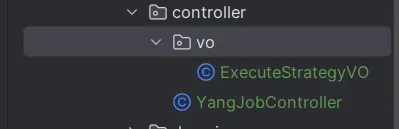
controller层的结构如下图所示,其实就和普通的MVC层一样,定义一些VO类,然后调用application层的方法返回信息。
infrastructure层
infrastructure层主要负责技术细节问题的处理,比如数据库的CRUD、搜索引擎、文件系统、分布式服务的RPC等,此外,领域防腐的重任也在这里,外部依赖需要通过gateway的转义处理,才能被上面的App层和domain层使用。
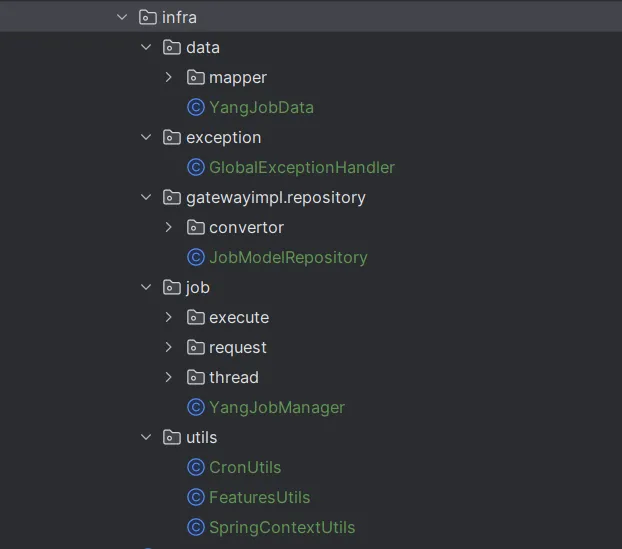
基础设施层的内容如下图所示,data包是数据库实体和对应的mapper,exception是全局异常处理,gateway则是我们的防腐层,job包为上一章提到的定时任务基础设施。
application.yml
application.yml配置信息如下所示:
1
2
3
4
5
6
7
8
9
10
11
12
| spring:
datasource:
username: root
password: 3fa4d180
driver-class-name: com.mysql.cj.jdbc.Driver
url: jdbc:mysql:
thymeleaf:
cache: false
prefix: classpath:/templates/
encoding: UTF-8
suffix: .html
mode: HTML
|
测试
启动项目,通过接口调用,进行测试。因为我们的YangJobModel模型对executeClassPath做了校验,以确保执行的类实现了IJobExecutor接口,因此,为了方便测试,我们添加两个测试类,实现IJobExecutor接口进行测试。
1
2
3
4
5
6
7
8
9
10
11
12
13
14
15
16
17
18
19
20
21
22
23
24
25
26
27
28
29
30
31
32
33
34
35
36
37
38
39
| package com.yang.job.application.task;
import com.yang.job.infra.job.execute.IYangJobExecutor;
import com.yang.job.infra.job.execute.YangJobExecuteRequest;
import java.text.SimpleDateFormat;
import java.util.Date;
public class HelloWorldJobExecutor implements IYangJobExecutor {
@Override
public void execute(YangJobExecuteRequest yangJobExecuteRequest) {
SimpleDateFormat simpleDateFormat = new SimpleDateFormat("yyyy-MM-dd HH:mm:ss");
String nowTime = simpleDateFormat.format(new Date());
System.out.println(String.format("Hello world! jobId: %s, nowTime:%s", yangJobExecuteRequest.getJobId(), nowTime));
}
}
package com.yang.job.application.task;
import com.yang.job.infra.job.execute.IYangJobExecutor;
import com.yang.job.infra.job.execute.YangJobExecuteRequest;
import java.text.SimpleDateFormat;
import java.util.Date;
public class TestJobExecutor implements IYangJobExecutor {
@Override
public void execute(YangJobExecuteRequest yangJobExecuteRequest) {
SimpleDateFormat simpleDateFormat = new SimpleDateFormat("yyyy-MM-dd HH:mm:ss");
String nowTime = simpleDateFormat.format(new Date());
System.out.println(String.format("class: %s, Hello world! jobId:%s, nowTime:%s",
this.getClass().getName(), yangJobExecuteRequest.getJobId(), nowTime
));
}
}
|
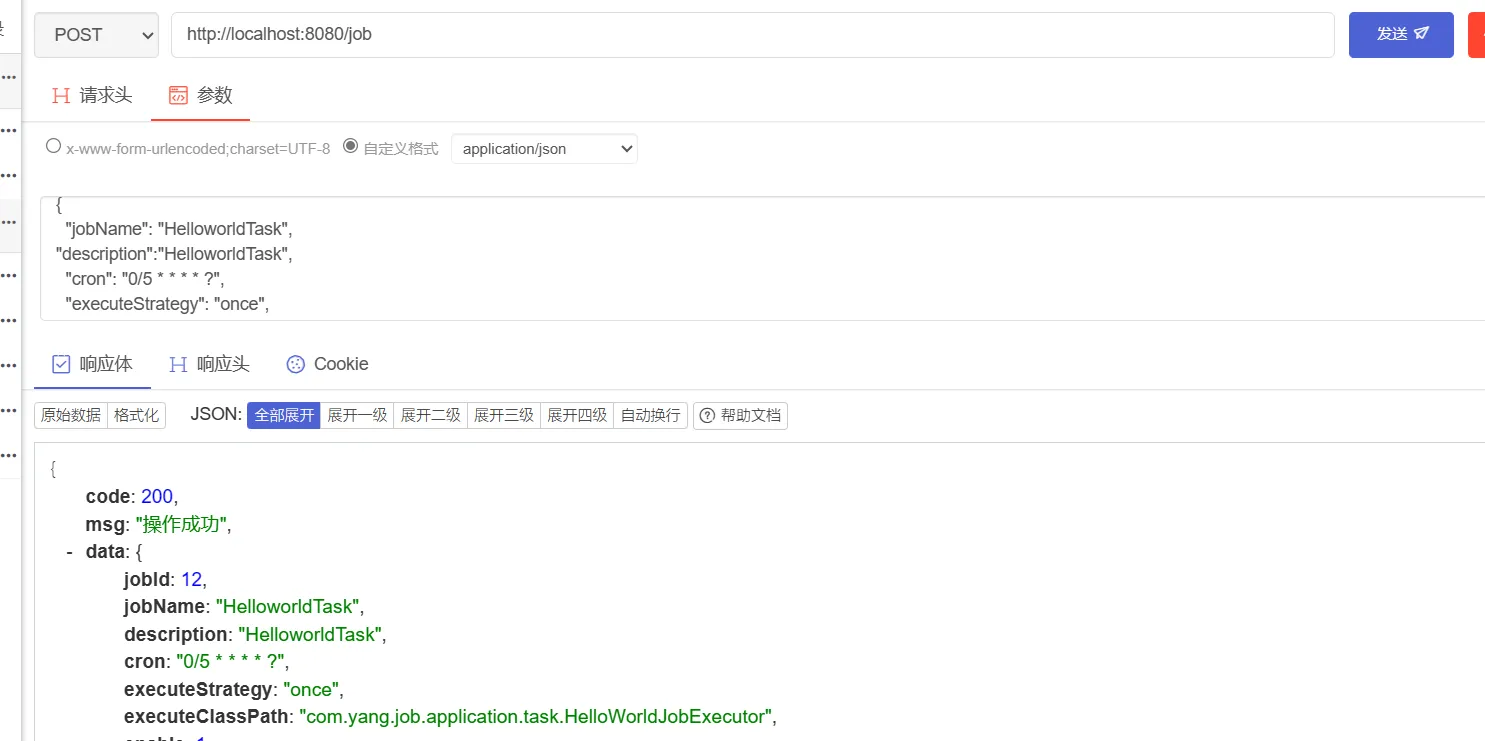
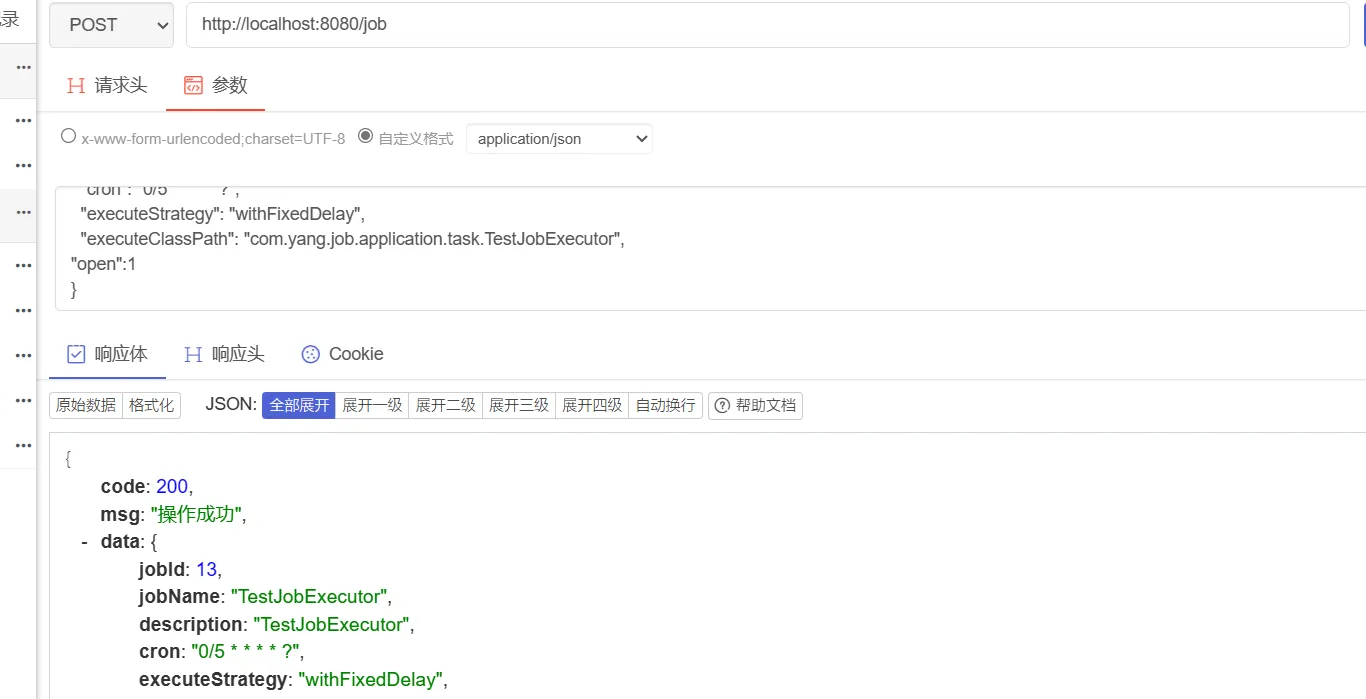
然后我们,启动项目,调用接口,进行测试
启动时注册开启的定时任务
上述流程跑通后,我们查看数据库,可以看到对应的记录,说明项目的增删改查基本没有什么问题,但是,我们从数据库中,可以看到,这些定时任务是开启的,而我们现在的后端代码中,还没有将这些定时任务添加到YangJobManager中进行定时任务的执行或取消。
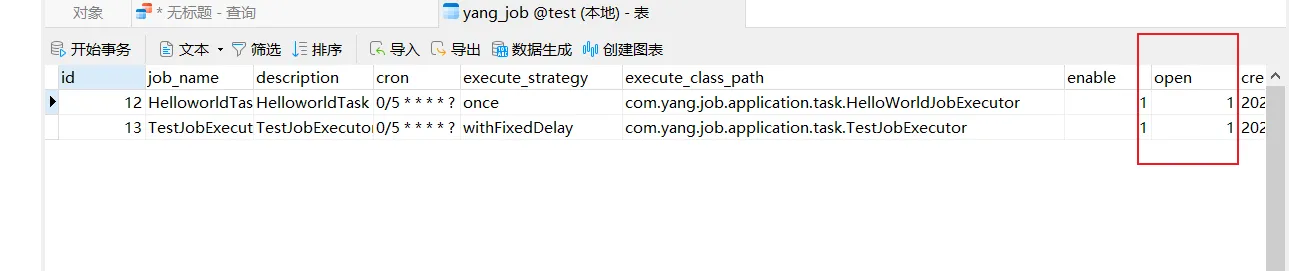
因此,我们先修改YangJobModel模块中,添加提交任务的方法submitJob,这里就不符合COLA中domain不依赖其他层级的要求,因为它依赖了infrastructure基础设施层,但是仍然符合DDD四层架构中,上层依赖下层,而下层不依赖上层的要求。
1
2
3
4
5
6
7
8
9
10
11
12
13
14
15
16
17
18
19
20
21
22
23
24
25
26
27
28
29
30
31
32
33
34
35
36
37
38
39
40
41
42
43
44
45
46
47
48
49
50
51
52
53
54
55
56
57
58
59
60
61
62
63
64
65
66
67
68
69
70
71
72
73
74
75
76
77
78
79
80
81
82
83
84
85
86
87
88
89
90
91
92
93
94
95
96
97
98
99
100
101
102
103
104
105
106
107
108
109
110
111
112
113
114
| package com.yang.job.domain.model;
import com.yang.job.client.dto.common.BusinessException;
import com.yang.job.client.dto.common.ErrorCode;
import com.yang.job.domain.enums.JobExecuteStrategyEnum;
import com.yang.job.infra.job.YangJobManager;
import com.yang.job.infra.job.request.YangJobSubmitParam;
import com.yang.job.infra.utils.CronUtils;
import com.yang.job.infra.utils.SpringContextUtils;
import lombok.Data;
import java.io.Serializable;
import java.time.ZonedDateTime;
import java.util.Date;
import java.util.HashMap;
import java.util.Map;
@Data
public class YangJobModel implements Serializable {
private Integer jobId;
private String jobName;
private String description;
private String cron;
private String executeClassPath;
private Runnable runnable;
private JobExecuteStrategyEnum executeStrategy;
private Integer enable;
private Integer open;
private Date createTime;
private Date updateTime;
private Map<String, String> featureMap = new HashMap<>();
private Map<String, String> executeParamMap = new HashMap<>();
public boolean isEnable() {
if (this.enable == null) {
return false;
}
return this.enable == 1;
}
public boolean isOpen() {
if (!isEnable()) {
return false;
}
if (this.open == null) {
return false;
}
return this.open == 1;
}
public boolean isClose() {
return !isOpen();
}
public void setExecuteClassPath(String executeClassPath) {
if (executeClassPath == null || executeClassPath.isEmpty()) {
throw new BusinessException(ErrorCode.UN_LEGAL_CLASS_PATH);
}
try {
Class.forName(executeClassPath);
} catch (ClassNotFoundException e) {
e.printStackTrace();
throw new BusinessException(ErrorCode.UN_LEGAL_CLASS_PATH);
}
this.executeClassPath = executeClassPath;
}
public void setExecuteStrategy(JobExecuteStrategyEnum jobExecuteStrategyEnum) {
if (jobExecuteStrategyEnum == null) {
throw new BusinessException(ErrorCode.EXECUTE_STRATEGY_NO_EXIST);
}
this.executeStrategy = jobExecuteStrategyEnum;
}
public void submitJob() {
YangJobSubmitParam yangJobSubmitParam = convert2YangJobSubmitParam();
YangJobManager yangJobManager = getYangJobManager();
yangJobManager.submitJob(yangJobSubmitParam);
}
private YangJobSubmitParam convert2YangJobSubmitParam() {
YangJobSubmitParam yangJobBuildParam = new YangJobSubmitParam();
yangJobBuildParam.setJobId(this.jobId);
yangJobBuildParam.setRunnable(this.runnable);
ZonedDateTime nextExecutionTime = CronUtils.nextExecutionTime(this.cron, ZonedDateTime.now());
ZonedDateTime nextNextExecutionTime = CronUtils.nextExecutionTime(this.cron, nextExecutionTime);
long nowEochMill = ZonedDateTime.now().toInstant().toEpochMilli();
long executeEochMill = nextExecutionTime.toInstant().toEpochMilli();
long secondExecuteEochMill = nextNextExecutionTime.toInstant().toEpochMilli();
yangJobBuildParam.setInitialDelay((int)(executeEochMill - nowEochMill) / 1000);
yangJobBuildParam.setPeriod((int)(secondExecuteEochMill - executeEochMill) / 1000);
yangJobBuildParam.setJobExecuteStrategy(this.executeStrategy);
return yangJobBuildParam;
}
private YangJobManager getYangJobManager() {
return SpringContextUtils.getBeanOfType(YangJobManager.class);
}
}
|
然后,我们添加YangJobContext类,作为定时任务的上下文类,在SpringBoot刷新容器的时候,监听到该刷新事件,然后从数据库中获取开启的定时任务,将该任务提交到YangJobManager中进行定时执行。当SpringBoot关闭容器的时候,监听关闭事件,然后调用YangJobManager的shutdown,关闭对应的线程池。
1
2
3
4
5
6
7
8
9
10
11
12
13
14
15
16
17
18
19
20
21
22
23
24
25
26
27
28
29
30
31
32
33
34
35
36
37
38
39
40
41
42
43
44
45
46
47
| package com.yang.job.infra.job;
import com.yang.job.domain.gateway.repository.IJobModelRepository;
import com.yang.job.domain.model.YangJobModel;
import com.yang.job.infra.utils.SpringContextUtils;
import org.springframework.context.ApplicationContext;
import org.springframework.context.ApplicationListener;
import org.springframework.context.event.ApplicationContextEvent;
import org.springframework.context.event.ContextClosedEvent;
import org.springframework.context.event.ContextRefreshedEvent;
import java.util.List;
public class YangJobContext implements ApplicationListener<ApplicationContextEvent> {
private static YangJobContext instance;
private ApplicationContext applicationContext;
@Override
public void onApplicationEvent(ApplicationContextEvent event) {
if (event instanceof ContextRefreshedEvent) {
System.out.println("刷新了=========");
YangJobContext.instance = this;
instance.applicationContext = applicationContext;
init();
} else if (event instanceof ContextClosedEvent) {
System.out.println("销毁了=========");
shutdown();
}
}
private void init() {
IJobModelRepository jobModelRepository = SpringContextUtils.getBeanOfType(IJobModelRepository.class);
List<YangJobModel> yangJobModelList = jobModelRepository.getOpenYangJobModelList();
for (YangJobModel yangJobModel : yangJobModelList) {
yangJobModel.submitJob();
}
}
private void shutdown() {
YangJobManager yangJobManager = SpringContextUtils.getBeanOfType(YangJobManager.class);
if (yangJobManager == null) {
return;
}
yangJobManager.shutdown();
}
}
|
最后,我们添加YangJob相关的配置类,将YangJobManager和YangJobContext注册到SpringBoot容器中进行统一管理。
1
2
3
4
5
6
7
8
9
10
11
12
13
14
15
16
17
18
19
20
21
22
23
24
25
26
27
28
29
30
31
32
33
| package com.yang.job.infra.job.configuration;
import com.yang.job.infra.job.YangJobContext;
import com.yang.job.infra.job.YangJobManager;
import com.yang.job.infra.job.thread.YangJobThreadFactory;
import org.springframework.context.annotation.Bean;
import org.springframework.context.annotation.Configuration;
import java.util.concurrent.LinkedBlockingQueue;
import java.util.concurrent.ScheduledThreadPoolExecutor;
import java.util.concurrent.ThreadPoolExecutor;
import java.util.concurrent.TimeUnit;
@Configuration
public class YangJobConfiguration {
@Bean
public ScheduledThreadPoolExecutor scheduledThreadPoolExecutor() {
int availableProcessors = Runtime.getRuntime().availableProcessors();
return new ScheduledThreadPoolExecutor(availableProcessors, new YangJobThreadFactory("yang"));
}
@Bean
public YangJobManager yangJobManager() {
return new YangJobManager.YangJobManagerBuilder()
.setScheduledExecutorService(scheduledThreadPoolExecutor())
.build();
}
@Bean
public YangJobContext yangJobContext() {
return new YangJobContext();
}
}
|
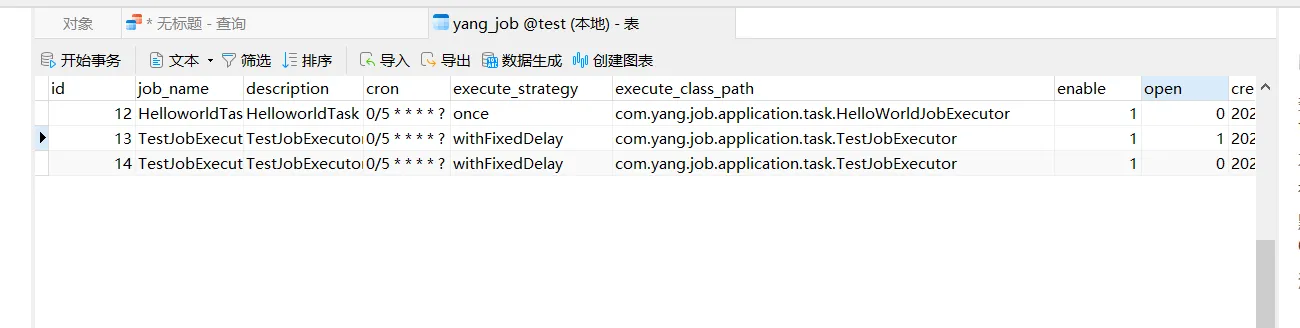
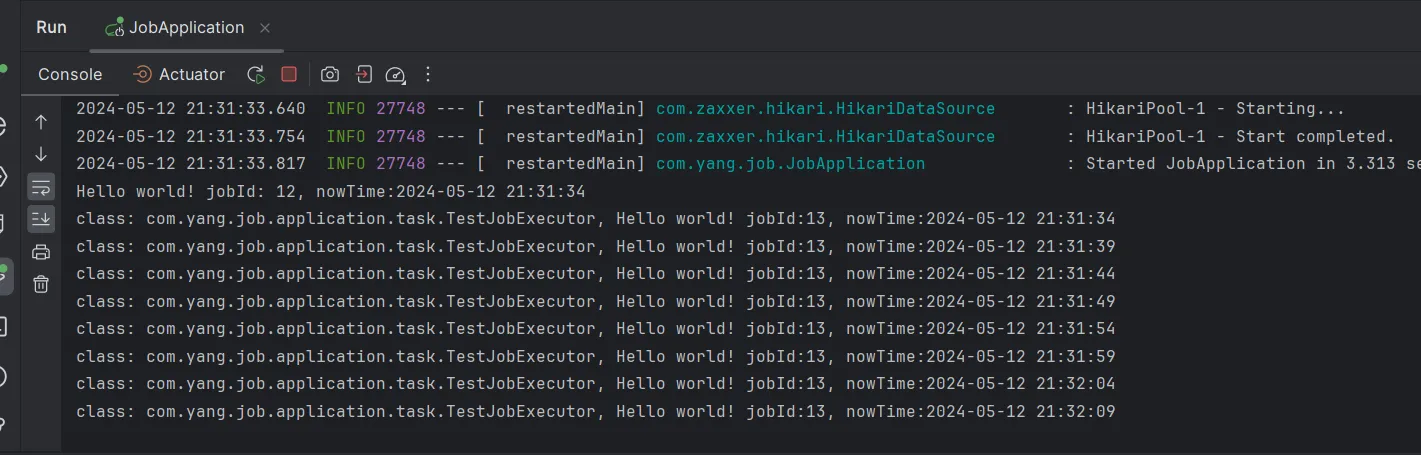
添加上述代码后,我们重新启动项目,然后观察控制台,如下图所示,jobId为12的只执行一次,jobId为13的每隔5秒执行一次,这个和它们在数据库中的执行策略保持一致,前者为once,后者为withFixedDelay。
领域事件
添加定时任务后置事件
我们在添加定时任务时,接口的入参如下:
1
2
3
4
5
6
7
8
9
10
11
12
13
14
15
16
17
18
19
20
21
22
23
24
25
26
27
| package com.yang.job.client.dto.command;
import lombok.Data;
import java.io.Serializable;
import java.util.HashMap;
import java.util.Map;
@Data
public class NewYangJobCommand implements Serializable {
private String jobName;
private String description;
private String cron;
private String executeStrategy;
private String executeClassPath;
private Integer open;
private Map<String, String> params = new HashMap<>();
}
|
我们看到,可以通过open参数,来决定新建的定时任务是否开启,在之前的测试中,我们添加的定时任务open参数都设置为1,从数据库的角度看,数据确实持久化了,并且open的值也为1,但是从行为看是不对的,我们添加该任务,并且该任务是open的,那么当我们添加成功后,应该将该任务注册到YangJobManager。
最简单的方式,便是在添加成功后,做判断,如果open为1,那么调用YangJobModel的submitJob方法
1
2
3
4
5
6
7
8
9
10
11
12
13
| @Override
public Response<YangJobDTO> saveYangJob(NewYangJobCommand newYangJobCommand) {
YangJobModel yangJobModel = convert2YangJobModel(newYangJobCommand);
if (jobModelRepository.saveYangJobModel(yangJobModel)) {
if (yangJobModel.isOpen()) {
yangJobModel.submitJob();
}
YangJobDTO yangJobDTO = yangJobDTOConvertor.convert2DTO(yangJobModel);
return Response.success(yangJobDTO);
}
return Response.fail();
}
|
但上述方法有一个问题,如果后续我们多了其他需求,比如虽然open为0,但是这个任务比较特殊,初次入库时必须执行一次等等奇奇怪怪的需求,那么我们在添加成功后,需要有一大串判断逻辑,影响后续的维护。
为解决上述问题,我们可以通过事件的方式,进行解耦。在我的第一份实习中,遇到的项目,就是用事件的方式,来进行解耦,一开始我很不理解这种方式,因为发送的事件太多了,从开始到结束将近10个事件,每次看代码都要从一个事件处理类,跳到另一个事件处理类,但是后来看了一些DDD的书籍后,有点理解这种做法了,这种应该就是属于领域事件,因为这些事件,将不同子域串联起来,比如从收单到支付再到账户等域,通过领域事件,将这些不同的域串联起来,此外又不会使两个域之间存在强耦合的代码,从而方便后续的维护。
因此,这里也使用事件的方式,在将定时任务持久化到数据库后,发送一个持久化成功后置处理事件,由对应的事件处理者,进行逻辑判断以及相关的业务处理。
首先,我们在基础设施层中,添加事件的相关类。首先是我们定义一个事件类:
1
2
3
4
5
| package com.yang.job.infra.event;
public interface IEvent <T> {
T getData();
}
|
然后定义对应的事件处理类:
1
2
3
4
5
| package com.yang.job.infra.event;
public interface IEventHandler <Event extends IEvent> {
void execute(Event event);
}
|
添加EventCenter事件中心类,用于推送同步事件或异步事件
1
2
3
4
5
6
7
8
9
10
11
12
13
14
15
16
17
18
19
20
21
22
23
24
25
26
27
28
29
30
31
32
33
34
35
36
37
38
39
40
41
42
43
44
45
46
47
48
49
50
51
52
53
54
55
56
57
58
59
| package com.yang.job.infra.event;
import com.google.common.eventbus.AsyncEventBus;
import com.google.common.eventbus.EventBus;
import java.util.Map;
import java.util.concurrent.ConcurrentHashMap;
import java.util.concurrent.ExecutorService;
import java.util.concurrent.TimeUnit;
public class EventCenter {
private EventBus eventBus = new EventBus();
private AsyncEventBus asyncEventBus;
private ExecutorService asyncEventExecutorService;
private static Map<String, IEventHandler> eventHandlerMap = new ConcurrentHashMap<>();
public EventCenter(ExecutorService executorService) {
this.asyncEventExecutorService = executorService;
asyncEventBus = new AsyncEventBus(executorService);
}
public void postEvent(IEvent iEvent) {
String eventClassName = iEvent.getClass().getName();
IEventHandler iEventHandler = eventHandlerMap.get(eventClassName);
eventBus.register(iEventHandler);
eventBus.post(iEvent);
}
public void asyncPostEvent(IEvent iEvent) {
String eventClassName = iEvent.getClass().getName();
IEventHandler iEventHandler = eventHandlerMap.get(eventClassName);
asyncEventBus.register(iEventHandler);
asyncEventBus.post(iEvent);
}
public void shutdown() {
if (this.asyncEventExecutorService == null) {
return;
}
if (!asyncEventExecutorService.isShutdown()) {
asyncEventExecutorService.shutdown();
try {
if (!asyncEventExecutorService.awaitTermination(10, TimeUnit.SECONDS)) {
asyncEventExecutorService.shutdownNow();
}
} catch (InterruptedException e) {
e.printStackTrace();
}
}
}
public static void registerEventHandler(String eventName, IEventHandler iEventHandler) {
eventHandlerMap.put(eventName, iEventHandler);
}
}
|
因为我们使用的是google的guava事件框架,在guava中,事件处理者要在相关的方法上,添加@Subscribe注解,以便能正确监听到事件,但很多时候,我们在定义事件处理者的时候,经常会忘记加上一些注解,导致后续达不到预期的效果,难以排除问题,因此,这里添加EventBeanPostProcessor类,实现BeanPostProcessor接口,在SpringBoot的bean构造完毕后,我们检查这些事件处理者bean,判断其是否由subscribe注解。
1
2
3
4
5
6
7
8
9
10
11
12
13
14
15
16
17
18
19
20
21
22
23
24
25
26
27
28
29
30
31
32
33
34
35
36
37
38
39
40
41
42
43
44
45
46
47
48
49
50
51
52
53
54
| package com.yang.job.infra.event.schema;
import com.google.common.eventbus.Subscribe;
import com.yang.job.client.dto.common.BusinessException;
import com.yang.job.client.dto.common.ErrorCode;
import com.yang.job.infra.event.EventCenter;
import com.yang.job.infra.event.IEventHandler;
import org.springframework.beans.BeansException;
import org.springframework.beans.factory.config.BeanPostProcessor;
import org.springframework.stereotype.Component;
import java.lang.reflect.Method;
@Component
public class EventBeanPostProcessor implements BeanPostProcessor
Method subscribeMethod = getSubscribeMethod(bean);
Class<?>[] parameterTypes = subscribeMethod.getParameterTypes();
String eventName = parameterTypes[0].getName();
EventCenter.registerEventHandler(eventName, (IEventHandler) bean);
return bean;
}
private Method getSubscribeMethod(Object bean)
Class<?>[] parameterTypes = method.getParameterTypes();
if (parameterTypes.length > 1)
if (parameterTypes[0].isInterface())
++ subscribeCount;
subscribeMethod = method;
}
if (subscribeCount == 0)
else if (subscribeCount > 1)
return subscribeMethod;
}
}
|
然后添加EventBusContext上下文类
1
2
3
4
5
6
7
8
9
10
11
12
13
14
15
16
17
18
19
20
21
22
23
24
25
26
27
28
29
30
31
32
33
| package com.yang.job.infra.event;
import com.yang.job.infra.utils.SpringContextUtils;
import org.springframework.context.ApplicationListener;
import org.springframework.context.event.ApplicationContextEvent;
import org.springframework.context.event.ContextClosedEvent;
import org.springframework.context.event.ContextRefreshedEvent;
import org.springframework.core.Ordered;
public class EventBusContext implements ApplicationListener<ApplicationContextEvent>, Ordered {
private static EventBusContext instance;
private ApplicationContextEvent applicationContextEvent;
@Override
public void onApplicationEvent(ApplicationContextEvent event) {
if (event instanceof ContextRefreshedEvent) {
System.out.println("刷新了==============");
EventBusContext.instance = this;
instance.applicationContextEvent = applicationContextEvent;
} else if (event instanceof ContextClosedEvent) {
System.out.println("销毁了==============");
EventCenter eventcenter = SpringContextUtils.getBeanOfType(EventCenter.class);
eventcenter.shutdown();
}
}
@Override
public int getOrder() {
return 30;
}
}
|
最后,添加event相关的配置类:
1
2
3
4
5
6
7
8
9
10
11
12
13
14
15
16
17
18
19
20
21
22
23
24
25
26
27
28
29
30
31
| package com.yang.job.infra.event.configuration;
import com.yang.job.infra.event.EventBusContext;
import com.yang.job.infra.event.EventCenter;
import org.springframework.context.annotation.Bean;
import org.springframework.context.annotation.Configuration;
import java.util.concurrent.*;
@Configuration
public class EventBusConfiguration {
@Bean
public ExecutorService asyncEventExecutorService() {
return new ThreadPoolExecutor(Runtime.getRuntime().availableProcessors(),
Runtime.getRuntime().availableProcessors() * 2 + 1,
60, TimeUnit.SECONDS,
new LinkedBlockingQueue<>(200),
Executors.defaultThreadFactory(),
new ThreadPoolExecutor.CallerRunsPolicy());
}
@Bean
public EventCenter eventCenter() {
return new EventCenter(asyncEventExecutorService());
}
@Bean
public EventBusContext eventBusContext() {
return new EventBusContext();
}
}
|
上述event基础设施搭建完毕后,我们开始添加对应的事件。但是这个事件应该放在哪一层,是比较困惑我的,因为这个不算领域事件,毕竟我们项目中并没有涉及到其他的域,但是如果放在application层又不太好,毕竟application只是对业务流程的编排,是一层薄薄的封装,而这些事件处理者是承担一部分业务逻辑的,最后决定还是放在domain层,理由是domain层主要是业务逻辑的封装,而事件也是业务逻辑的一部分。
我们添加定时任务添加成功后置事件:
1
2
3
4
5
6
7
8
9
10
11
12
13
14
15
16
17
| package com.yang.job.domain.event;
import com.yang.job.infra.event.IEvent;
public class SaveJobPostEvent implements IEvent<Integer> {
private Integer jobId;
public SaveJobPostEvent(Integer jobId) {
this.jobId = jobId;
}
@Override
public Integer getData() {
return this.jobId;
}
}
|
添加对应的事件处理者:
1
2
3
4
5
6
7
8
9
10
11
12
13
14
15
16
17
18
19
20
21
22
23
24
25
26
27
28
29
30
31
32
| package com.yang.job.domain.event.handler;
import com.google.common.eventbus.Subscribe;
import com.yang.job.domain.event.SaveJobPostEvent;
import com.yang.job.domain.gateway.repository.IJobModelRepository;
import com.yang.job.domain.model.YangJobModel;
import com.yang.job.infra.event.IEventHandler;
import org.springframework.stereotype.Component;
import javax.annotation.Resource;
@Component
public class SaveJobPostEventHandler implements IEventHandler<SaveJobPostEvent> {
@Resource
private IJobModelRepository jobModelRepository;
@Override
@Subscribe
public void execute(SaveJobPostEvent event) {
Integer jobId = event.getData();
YangJobModel yangJobModel = jobModelRepository.getYangJobModelById(jobId);
if (yangJobModel == null) {
return;
}
if (!yangJobModel.isOpen()) {
return;
}
yangJobModel.submitJob();
}
}
|
然后我们修改YangJobApplicationService的saveYangJob方法,在持久化数据库成功后,发送持久化成功后置事件:
1
2
3
4
5
6
7
8
9
10
11
| @Override
public Response<YangJobDTO> saveYangJob(NewYangJobCommand newYangJobCommand) {
YangJobModel yangJobModel = convert2YangJobModel(newYangJobCommand);
if (jobModelRepository.saveYangJobModel(yangJobModel)) {
yangJobModel.postSaveJobEvent();
YangJobDTO yangJobDTO = yangJobDTOConvertor.convert2DTO(yangJobModel);
return Response.success(yangJobDTO);
}
return Response.fail();
}
|
修改YangJobModel,加上推送事件的方法:
1
2
3
4
5
6
7
8
| public void postSaveJobEvent() {
SaveJobPostEvent saveJobPostEvent = new SaveJobPostEvent(this.jobId);
getEventCenter().asyncPostEvent(saveJobPostEvent);
}
private EventCenter getEventCenter() {
return SpringContextUtils.getBeanOfType(EventCenter.class);
}
|
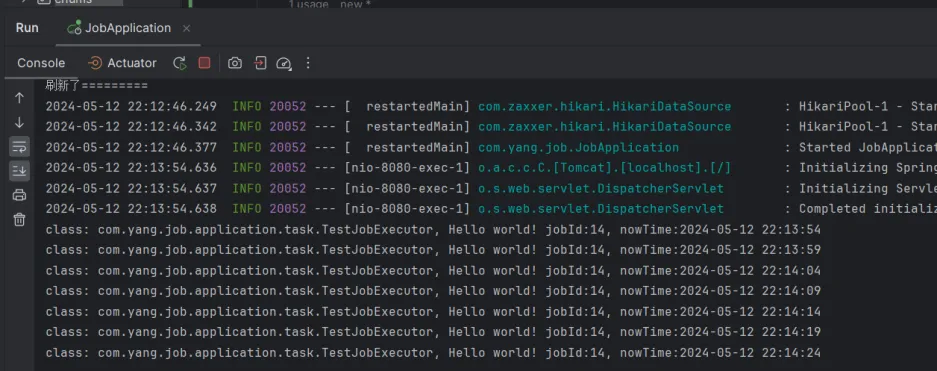
重新启动项目,我们再次添加一个定时任务,并将定时任务设置为open
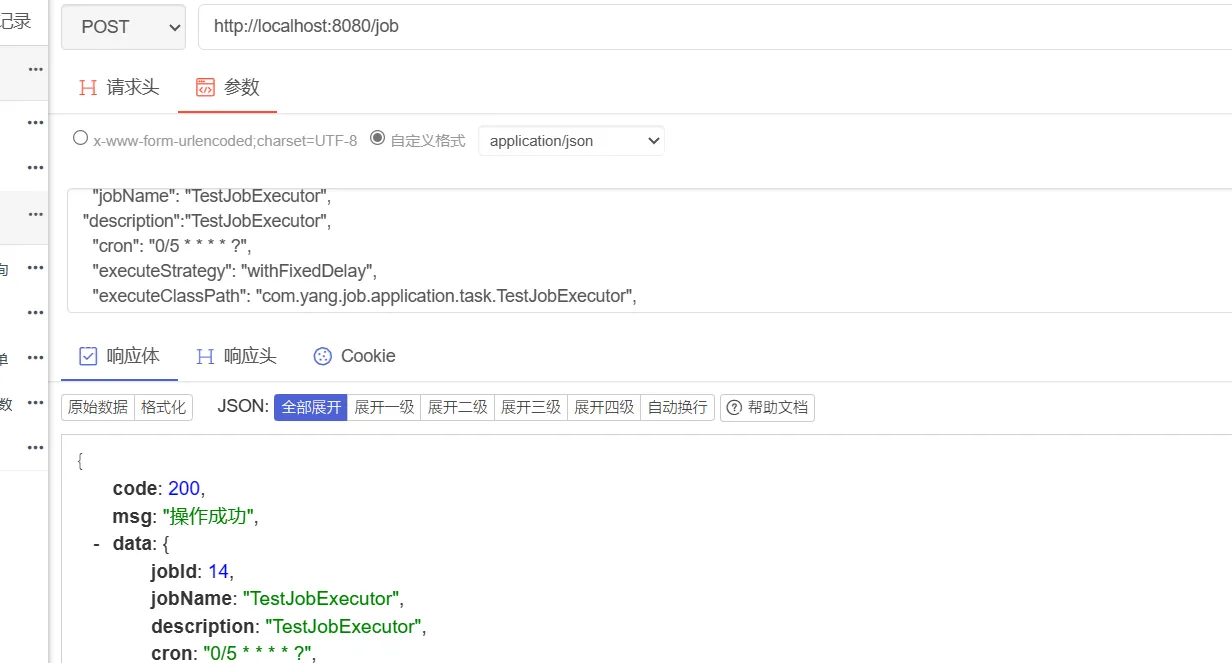
添加成功后,我们查看控制台,可以看到,确实有发送对应的事件,将定时任务注册到YangJobManger中。
更新定时任务后置事件
添加更新定时任务后置事件:
1
2
3
4
5
6
7
8
9
10
11
12
13
14
15
| package com.yang.job.domain.event;
import com.yang.job.infra.event.IEvent;
public class UpdateJobPostEvent implements IEvent<Integer> {
private Integer jobId;
public UpdateJobPostEvent(Integer jobId) {
this.jobId = jobId;
}
@Override
public Integer getData() {
return this.jobId;
}
}
|
添加对应的事件处理者,当我们更新定时任务后,可能更新的内容是将定时任务关闭或开启,也可能是对应的策略,因此,我们的事件处理者会首先关闭对应的定时任务,然后再判断定时任务是否开启,开启的话,重新将任务注册到YangJobManager中。
1
2
3
4
5
6
7
8
9
10
11
12
13
14
15
16
17
18
19
20
21
22
23
24
25
26
27
28
29
30
31
32
33
34
| package com.yang.job.domain.event.handler;
import com.google.common.eventbus.Subscribe;
import com.yang.job.domain.event.UpdateJobPostEvent;
import com.yang.job.domain.gateway.repository.IJobModelRepository;
import com.yang.job.domain.model.YangJobModel;
import com.yang.job.infra.event.IEventHandler;
import org.springframework.stereotype.Component;
import javax.annotation.Resource;
@Component
public class UpdateJobPostEventHandler implements IEventHandler<UpdateJobPostEvent> {
@Resource
private IJobModelRepository jobModelRepository;
@Override
@Subscribe
public void execute(UpdateJobPostEvent event) {
Integer jobId = event.getData();
YangJobModel yangJobModel = jobModelRepository.getYangJobModelById(jobId);
if (yangJobModel == null) {
return;
}
yangJobModel.cancelJob();
if (yangJobModel.isOpen()) {
yangJobModel.submitJob();
}
}
}
|
修改YangJobModel,加上取消任务和推送更新后置事件的方法
1
2
3
4
5
6
7
8
9
| public void cancelJob() {
YangJobManager yangJobManager = getYangJobManager();
yangJobManager.cancelJob(this.jobId);
}
public void postUpdateJobEvent() {
UpdateJobPostEvent updateJobPostEvent = new UpdateJobPostEvent(this.jobId);
getEventCenter().asyncPostEvent(updateJobPostEvent);
}
|
最后,我们修改YangJobApplicationService的updateYangJob方法,在持久化数据库后,发送更新定时任务后置事件
1
2
3
4
5
6
7
8
9
10
11
12
13
14
15
16
17
18
19
20
21
22
23
24
25
26
27
28
29
30
31
32
33
34
| @Override
public Response<YangJobDTO> updateYangJob(UpdateYangJobCommand updateYangJobCommand) {
YangJobModel yangJobModel = jobModelRepository.getYangJobModelById(updateYangJobCommand.getJobId());
if (yangJobModel == null) {
return Response.fail();
}
if (updateYangJobCommand.getJobName() != null) {
yangJobModel.setJobName(updateYangJobCommand.getJobName());
}
if (updateYangJobCommand.getCron() != null) {
yangJobModel.setCron(updateYangJobCommand.getCron());
}
if (updateYangJobCommand.getOpen() != null) {
yangJobModel.setOpen(updateYangJobCommand.getOpen());
}
if (!updateYangJobCommand.getParams().isEmpty()) {
yangJobModel.setExecuteParamMap(updateYangJobCommand.getParams());
}
if (updateYangJobCommand.getExecuteClassPath() != null) {
yangJobModel.setExecuteClassPath(updateYangJobCommand.getExecuteClassPath());
}
if (updateYangJobCommand.getExecuteStrategy() != null) {
yangJobModel.setExecuteStrategy(JobExecuteStrategyEnum.getJobExecuteStrategyByName(updateYangJobCommand.getExecuteStrategy()));
}
if (jobModelRepository.updateYangJobModel(yangJobModel)) {
// 发送事件
yangJobModel.postUpdateJobEvent();
YangJobDTO yangJobDTO = yangJobDTOConvertor.convert2DTO(yangJobModel);
return Response.success(yangJobDTO);
}
return Response.fail();
}
|
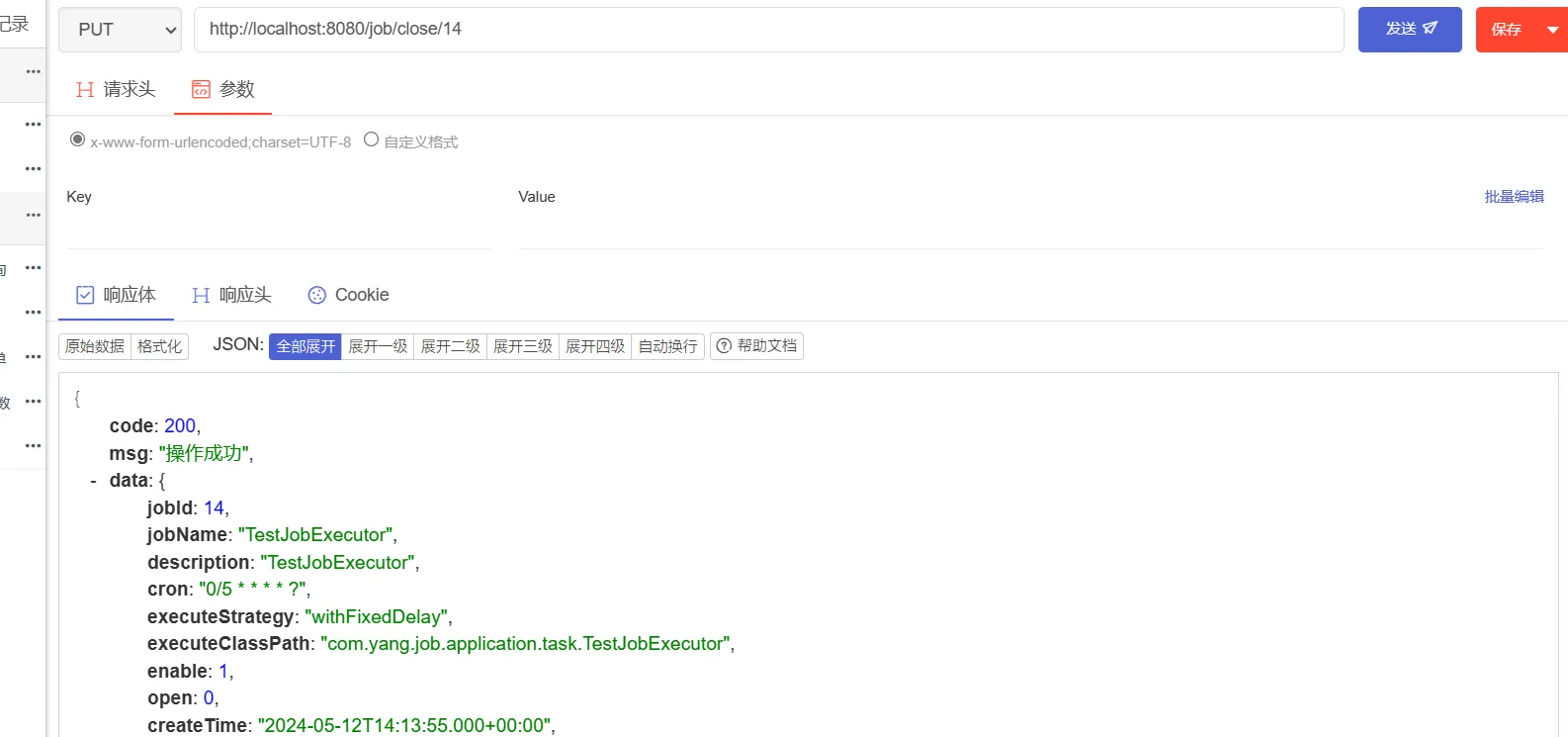
重启项目,我们先观察控制台,可以看到jobId为14的任务每5秒执行一次

然后我们调用close接口,关闭jobId为14的定时任务。
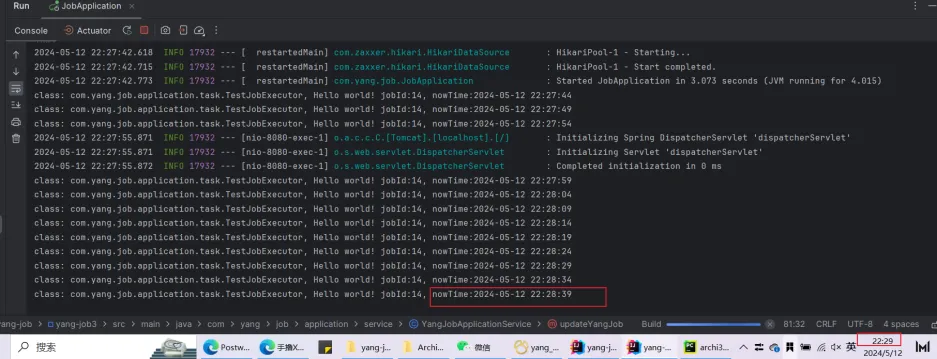
调用成功后,再次查看控制台,可见此时该定时任务不再执行。
删除定时任务后置事件
因为我们这里的删除,其实都是逻辑删除,本质上其实就是更新了enable字段,因此,删除成功后,推送更新定时任务后置事件即可,不过,这里虽然没有专门的删除定时任务后置事件,但还是在YangJobModel中,添加一个postDeleteJobEvent方法。
1
2
3
4
| public void postDeleteJobEvent() {
UpdateJobPostEvent updateJobPostEvent = new UpdateJobPostEvent(this.jobId);
getEventCenter().asyncPostEvent(updateJobPostEvent);
}
|
然后我们修改YangJobApplicationService的deleteYangJob方法,在删除操作成功后,调用postDeleteJobEvent方法,推送对应的事件。
1
2
3
4
5
6
7
8
9
10
| @Override
public Response<YangJobDTO> deleteYangJob(DeleteYangJobCommand deleteYangJobCommand) {
Integer jobId = deleteYangJobCommand.getJobId();
if (jobModelRepository.deleteJobModel(jobId)) {
YangJobModel yangJobModel = jobModelRepository.getYangJobModelById(jobId);
yangJobModel.postDeleteJobEvent();
return Response.success();
}
return Response.fail();
}
|
提交任务后置事件
之前我们提到,任务的执行策略有四种——立即执行、执行一次、任务执行完毕后间隔执行、任务执行开始后间隔执行。但是我们现在的系统中,假设前两种策略对应的定时任务执行过了,那么按道理来说,不应该再继续执行了,可是,当我们重启系统时,因为它们在数据库中的open字段值为1,也就是任务状态是开启的,所以会再次被执行。
为解决上述问题,我们在提交任务给YangJobManager后,发送一个提交任务后置事件,在对应的事件处理者中,判断执行策略,如果是前两种策略,那么我们提交成功后需要把任务状态设置为关闭。
首先,我们添加提交任务后置事件:
1
2
3
4
5
6
7
8
9
10
11
12
13
14
15
16
17
18
| package com.yang.job.domain.event;
import com.yang.job.infra.event.IEvent;
import com.yang.job.infra.job.request.YangJobSubmitParam;
public class SubmitJobPostEvent implements IEvent<YangJobSubmitParam> {
private YangJobSubmitParam yangJobSubmitParam;
public SubmitJobPostEvent(YangJobSubmitParam yangJobSubmitParam) {
this.yangJobSubmitParam = yangJobSubmitParam;
}
@Override
public YangJobSubmitParam getData() {
return yangJobSubmitParam;
}
}
|
添加对应的事件处理者:
1
2
3
4
5
6
7
8
9
10
11
12
13
14
15
16
17
18
19
20
21
22
23
24
25
26
27
28
29
30
31
32
33
34
35
| package com.yang.job.domain.event.handler;
import com.google.common.eventbus.Subscribe;
import com.yang.job.domain.enums.JobExecuteStrategyEnum;
import com.yang.job.domain.event.SubmitJobPostEvent;
import com.yang.job.domain.gateway.repository.IJobModelRepository;
import com.yang.job.domain.model.YangJobModel;
import com.yang.job.infra.event.IEventHandler;
import com.yang.job.infra.job.request.YangJobSubmitParam;
import org.springframework.stereotype.Component;
import javax.annotation.Resource;
@Component
public class SubmitJobPostEventHandler implements IEventHandler<SubmitJobPostEvent> {
@Resource
private IJobModelRepository jobModelRepository;
@Override
@Subscribe
public void execute(SubmitJobPostEvent event) {
YangJobSubmitParam yangJobSubmitParam = event.getData();
JobExecuteStrategyEnum jobExecuteStrategy = yangJobSubmitParam.getJobExecuteStrategy();
if (jobExecuteStrategy == JobExecuteStrategyEnum.IMMEDIATE_EXECUTE || jobExecuteStrategy == JobExecuteStrategyEnum.ONCE) {
YangJobModel yangJobModel = jobModelRepository.getYangJobModelById(yangJobSubmitParam.getJobId());
if (!yangJobModel.isOpen()) {
return;
}
yangJobModel.setOpen(0);
jobModelRepository.updateYangJobModel(yangJobModel);
}
}
}
|
最后,我们修改YangJobModel的submitJob方法,在提交任务后,发送提交任务后置事件
1
2
3
4
5
6
7
8
| public void submitJob() {
YangJobSubmitParam yangJobSubmitParam = convert2YangJobSubmitParam()
YangJobManager yangJobManager = getYangJobManager()
yangJobManager.submitJob(yangJobSubmitParam)
// 提交任务后,发送提交任务后置事件
SubmitJobPostEvent submitJobPostEvent = new SubmitJobPostEvent(yangJobSubmitParam)
getEventCenter().postEvent(submitJobPostEvent)
}
|
上述准备完毕后,我们启动项目:
在数据库中,jobId=12的,执行策略为once,那么在启动项目后,发送提交任务后置事件,会将jobId的open属性重新设置为0
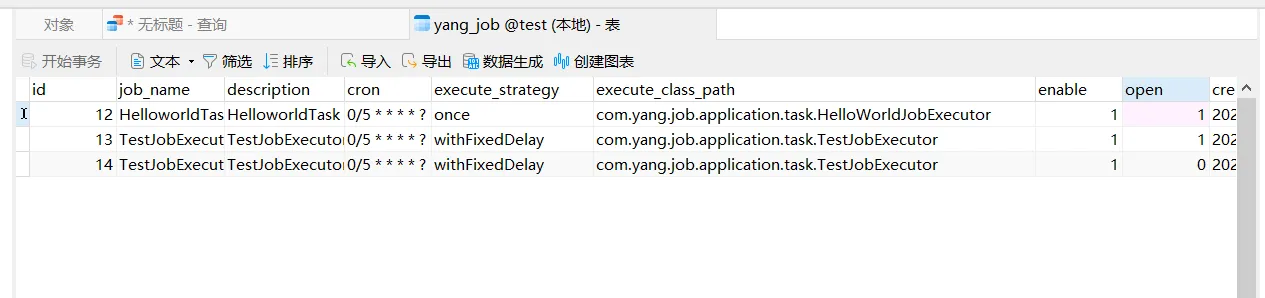
我们启动项目后,刷新数据库,可见open确实被重新设置为0。